DIY Works is reader-supported. When you buy through links on our site, we may earn an affiliate commission. Find out more.
Failing to remove moisture in your bathroom after you’ve had a shower or bath can potentially lead to long-term damage. If there is a window present in the room, you can open it to allow moisture to escape but if not, using an extractor fan is the best alternative. As well as dealing with excess humidity, they are also a great way of removing bad odours in the room too.
Most extractor fans for domestic bathrooms attach to 100mm openings. Therefore, if you are replacing an old unit, the installation shouldn’t take too long as there is no need to create a hole in the outside wall. In terms of noise output, they’ve improved massively over the years and all of our recommendations output less than 30 dB, which is considered almost silent.
To assist you in selecting an extractor fan, our handpicked selection lists top-performing fans, chosen based on our first-hand experience installing and using a range of models. Our testing and up-to-date research further ensure the quality of our recommendations.
How The DIY Works Team Tests & Rates The Bathroom Extractor Fans
Over the years, we’ve replaced several bathroom extractor fans due to them becoming faulty or simply not being up to the job. Due to the fact that ventilation in the bathroom is so important, we always opt for a high-performing unit.
As you can see in the photo, our most recent installation involved our top recommendation within this article (Envirovent SIL100T) and it’s a great bit of kit.
Richard Morgan/DIY Works
As well as our experience using a variety of bathroom extractor fans, we also based our recommendations on hours of research and a number of factors. Some of the factors that we considered included the extraction rate, noise output, size, design, timer and humidistat functionality, ease of installation, warranty and value.
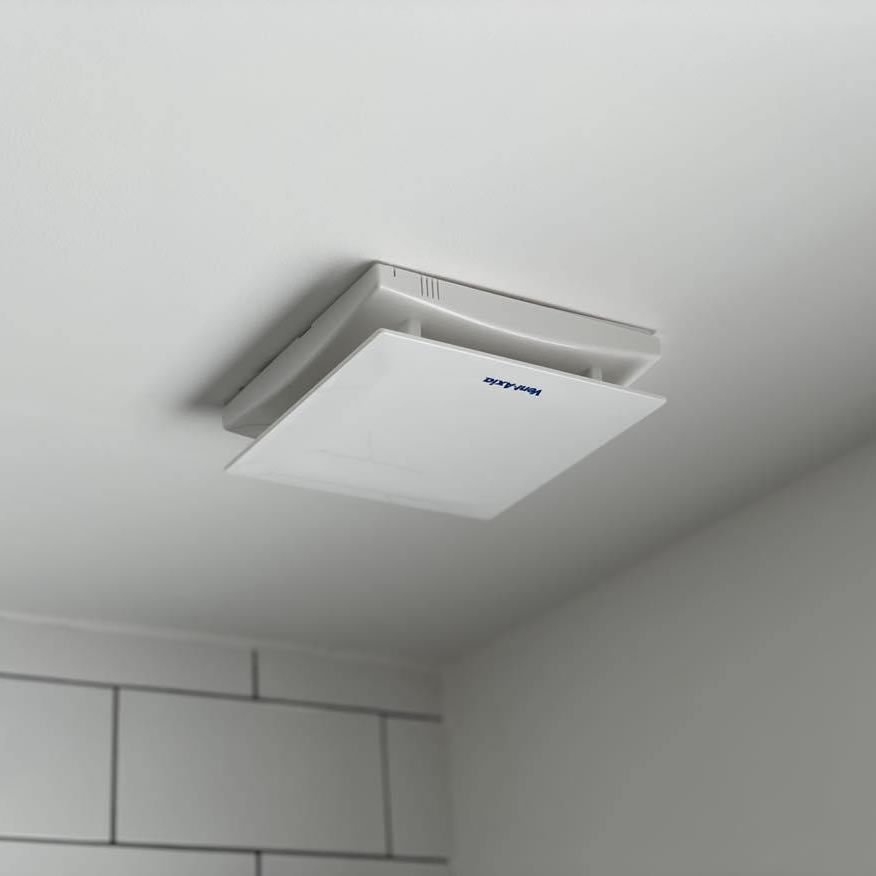
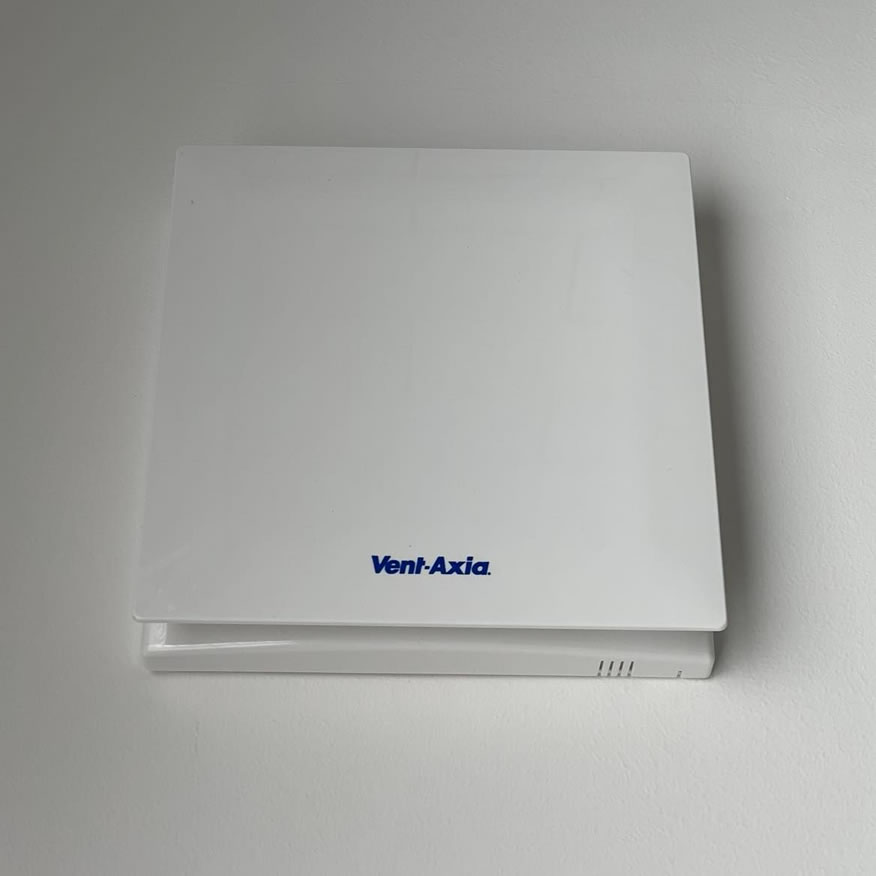
Other examples of our experience with bathroom extractor fans include the installation of the Vent-Axia VASF100T (rated as the best quiet bathroom extractor fan in our roundup above). We installed this unit to a family bathroom that was next to multiple bedrooms in the house. Therefore, the silent running of this extractor fan was greatly appreciated by the tenant who used to get woken up by the previous extractor fan that was installed.
Richard Morgan/DIY Works
Richard Morgan/DIY Works
Below is a video we posted on our YouTube channel that shows us testing the bathroom extractor fan. As you can see, apart from the floor creaking as we walk towards the fan, it’s very silent.
To keep up our commitment to reviewing and testing the latest bathroom extractor fans (for this article), we are continually testing out the latest units from top brands in the UK. This means that when we notice a brand has released a new and improved model, we will attempt to buy it and put it to the test (where applicable).
The Best Bathroom Extractor Fans
At DIY Works, our content is 100% independent and we would never recommend a product that we wouldn't use ourselves (read our editorial standards and how we test products).
The Envirovent SIL100T is one of the most popular bathroom extractor fans available in the UK that’s ideal for installing to 4-inch ducting. Its popularity is mainly due to the fact that it’s one of the quietest on the market with a sound output of just 26.5 dB. However, unlike other quiet fans available, this model is also powerful with an extraction rate of 26 litres per second, which is very impressive for a 4-inch axial fan.
Pros
Awarded the “Quiet Mark” award
IP45 rated and CE approved
Runs at 2,400 RPM
Suitable for bathroom and kitchen use
During testing, we wired it to the light (very easy to do)
Silent operation at just 26.5 dB
Powerful extraction rate at 26 litres per second
Cons
Only available in a white finish
To conclude, the Envirovent SIL100T is the best bathroom extractor fan on the market and it comes with everything required for the installation. Although it’s fairly basic in terms of the design, for most people, this won’t be an issue because of its performance and silent running.
For those looking for a more aesthetically pleasing extractor fan, the Xpelair C4HTS is the best option. The brand offers a variety of configurations of this model but thishumidistat and timerunit is the best of the bunch. Other models offered by the brand include the basic unit, timer and pull-cord switch fans.
A unique feature of the Xpelair C4HTS compared to other fans on the market is its two speeds. This enables the fan to extract air from the room at 15 or 21 litres per second.
Pros
Sleek and smooth fascia
Twist and click setup for easy maintenance
Suitable for wall, ceiling or panel fitting
Includes a 2 year manufacturers guarantee
16 dB noise output at 15 litres per second extraction
Fixings for installation are provided in the box
IPX4 rated
Aesthetically pleasing design that'll look great in any bathroom
Cons
Most expensive within our roundup
If you are willing to spend the extra, this bathroom extractor fan with humidistat functionality is a great option to consider. It ticks all the boxes and looks great with a fascia that can be removed for easy cleaning.
The Airflow iCon is relatively unique because it has an iris shutter that prevents air from blowing back into the room. According to the brand, it’s suitable for any bathroom or en-suite with three models to choose from that vary in size and power to best suit the requirements of the room it’s being installed in.
Pros
Desirable low profile design
Flow rate of 19 litres per second
Sound output of 30 dB
Supplied with all the hardware required for the installation
IPX4 rated
Backed by a three year warranty
Cons
Relatively expensive when compared to other extractors
Stopping air blowing back into the bathroom is the main selling point of this extractor fan. This is because it reduces the coldness, noise and also dirt coming in from the outside, which is a desirable feature for many. To conclude, the unique iris shutter and low profile design makes it more expensive than the alternatives but it certainly won’t disappoint.
4. Most Aesthetically Pleasing: Knightsbridge EX004T Bathroom Extractor Fan
Another aesthetically pleasing bathroom extractor fan is the Knightsbridge EX004T. It’s available in 14 different variations but the best model to choose is the 100 mm fan with built-in LEDs. The unique design may not be to everyone’s taste but it’ll certainly transform the room with a wall or ceiling installation.
Pros
Adjustable over-run timer
Compliant with the latest building regulations
LED lighting is activated upon activation of the fan
Extraction rate of 25 litres per second
Cons
Rated at 35 dB, which is the highest noise output out of all the extractors within our roundup
Overall, the Knightsbridge EX004T is a modern bathroom extractor fan that provides excellent value for the money and high performance. The Knightsbridge brand also offers a range of ducting kits to complete the installation too.
The Manrose QF100T is a bathroom extractor fan that’s designed specifically for quiet operation. The brand state that it only produces up to 27 dB and it has been proven in an anechoic chamber, which is a recognised UK standard.
Pros
Extraction rate of 21 litres per second
Supplied with integral backdraught shutters
Timer over run functionality
Low energy 4.8 watt motors
Constructed of ABS thermoplastics
Only produces 27 dB of noise
Complies with both Part F & L
Cons
Not very aesthetically pleasing with its basic design
Overall, the Manrose QF100T is a more affordable silent bathroom extractor fan that’s backed by a 3-year warranty. Compared to similarly priced alternatives that claim to be silent, this fan also has the extraction rate performance to match.
The Vent-Axia brand produces a range of bathroom extractor fans but this is their flagship model. Although it’s the most expensive within our roundup, it’s by far the quietest with a proven noise output of just 13 dB at a distance of 3 metres.
Pros
Modern design with anti-static finish
Complaint with part F and L building regulations
Constructed of durable ABS plastic
Extraction rate of 21 litres per second
Rated at IP44
Supplied with all the fixings
Noise output of 14 dB
Cons
Paying a premium for the low sound output
Compared to the highly rated Envirovent SIL100T alternative, this bathroom extractor fan is even quieter. However, you do have to pay a premium price for the quietness and it’s also not as powerful. Therefore, if you require a quiet bathroom extractor fan and you aren’t too worried about the price, the Vent-Axia VASF100T is a great option to consider.
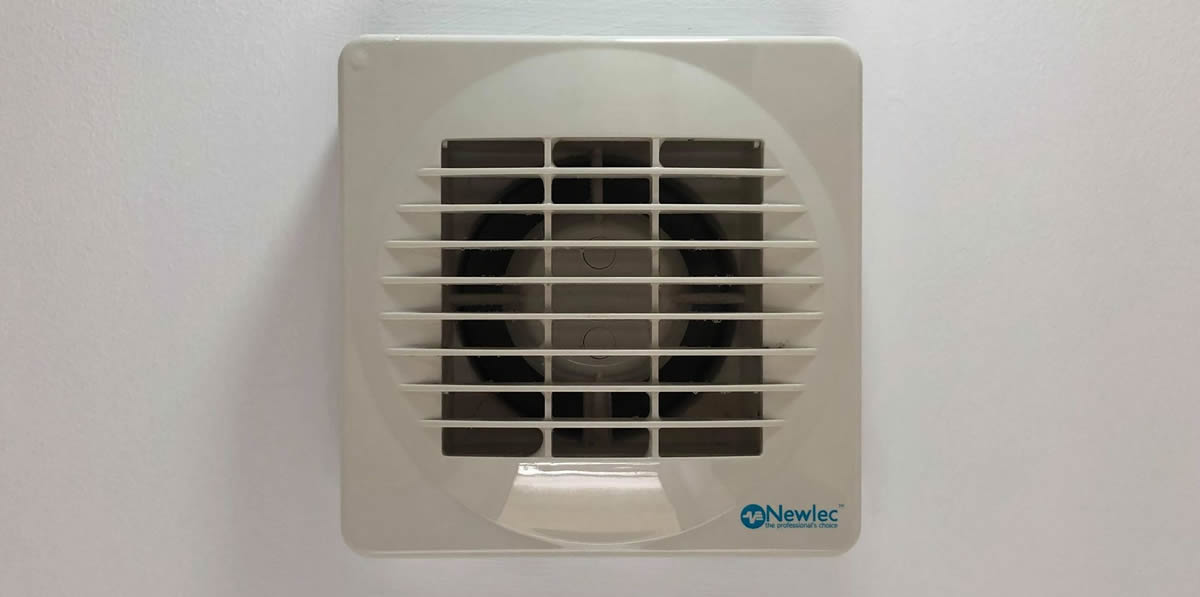
For those requiring an affordable bathroom extractor fan that’s actually worth buying, the Newlec NL880T is the best option to consider. Although it has a low price tag, the brand claim that it’s a professional quality fan that’ll be long-lasting and a direct replacement if you are changing a faulty unit.
Pros
Sound output of 32 dB
Extraction of 24 litres per second
CE and BEAB approved
High quality ABS mouldings
Cons
Basic design that lacks quality when compared to the premium alternatives
To conclude, if you require a silent bathroom extractor fan that’s powerful and affordable, the Newlec NL880T is perfect. When compared to other fans that are similarly priced, none come close to the quality of the NL880T model.
Bathroom Extractor Fan Buying Guide
Installing an extractor fan inside your bathroom or en-suite is a vital component that provides ventilation in the room. Without the fan, the build-up of mould and mildew increases, which can lead to long-term damage.
In terms of the installation, it’s made far easier when the hard work has already been done. This is because all the fan requires is a hole that leads outside to function and this can be difficult to do for the average DIY’er.
To help you make an informed buying decision, below is our detailed guide to extractor fans for bathrooms.
Extraction Rate
The rate at which air can be extracted from the bathroom is one way of determining the performance of an extractor fan. The measurement used for the extraction rate islitres per second (L/s) or metres cubed per hour (m3/hr).
The extraction rate of most bathroom extractor fans ranges from 18 to 26 litres per second. In short, the higher the volume an extractor fan can extract will result in improved performance with regards to reducing moisture and odours. However, too much extraction can lead to a negative air pressure, which can result in coldness in the room.
Building regulations statethat in the UK, a bathroom or shower room should have a fan capable of extracting at least 15 litres per second.
Noise Output
Older extractor fans are known for being noisy and this can be highly frustrating. However, manufacturers have gone to great lengths to make them far quieter than they once were.
When looking at the different bathroom extractor fans, all manufacturers provide the dB measurements froma distance of 3 metres. This is an industry standard and it allows you to judge which are the quietest fans. However, it’s worth noting that some fans may be quieter because they are less powerful/extract less air.
The quality of the bathroom extractor fan also plays a big part because once the fan begins to age, it can become noisy. This is because motor bearings can begin to wear and blades may start oscillating against the housing. Therefore, choosing the best possible fan you can get your hands on will ensure that the quality remains for many years.
The Size
All of the above extractor fans are suitable for 100 mm ducting but the designs mean that they vary in size. For example, some include a fascia that adds to the aesthetics but doesn’t contribute to the performance of the fan. We advise that you choose a size that best suits your bathroom décor and can be easily installed without additional drilling required.
Over Run Timer
An over-run timer is a function used by many manufacturers and it works by keeping the fan running for a specified period. This functionality can be wired into anelectric showeror more commonly into the lights.
Once either component is switched off, the over-run timer will kick in and the extra time the fan has to function helps to remove damp air and odours present in the room. The length of time may be set by the manufacturer but some premium fans may allow for adjustments.
Humidistat Functionality
A bathroom extractor fan that features a humidistat sensor is able to detect moisture in the air. This means that once the humidity within the bathroom has reached a certain trigger point, the fan will automatically switch on.
As you can see in the image of the Xpelair unit we installed, once the humidistat function had been triggered, it outputted a red light to indicate why it was running.
For this particular extractor fan, the light is on the main fascia but this differs depending on the unit you install in your bathroom.
Richard Morgan/DIY Works
Back Draught Shutter
The hole that’s required to use an extractor fan can produce a new problem. Large gusts of wind can blow through the ducting and into the bathroom. During cold nights, this can make the bathroom feel even colder, which isn’t what you want whilst jumping out of the shower. Using a shutter that fits into the ventilation duct or external grill can prevent the coldness from getting in from the outside. Therefore, it’s strongly recommended that you check what’s included in the box to ensure a back draught shutter is supplied.
Electrical Safety
Electricity and wet environments don’t match and it’s vital that the extractor fan you choose is safe to use. All manufacturers of bathroom extractor fans will state an industry standard known as an “IP Rating”.
Depending on this rating will determine how close the fan can be installed to the bath or shower. Theseareas are known as zonesand they are located a specific distance away from the bath or shower.
How To Replace a Bathroom Extractor Fan
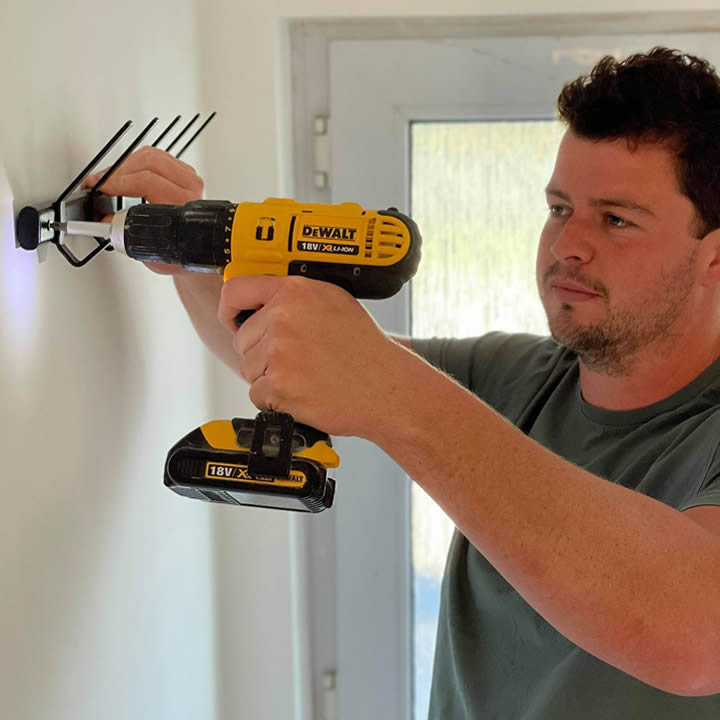
Unless you are renovating an old house or extending your property, you’ll more than likely be replacing an old unit rather than installing it from scratch. Therefore, to replace a bathroom extractor fan, follow the ten steps below:
Switch off the power supply.
Remove the screws holding the fascia onto the ceiling or wall.
Disconnect the wires leading to the housing.
Remove the ducting piping from the old fan.
Remove the old vent housing completely.
Make adjustments to the hole for the new vent housing if required.
Attach new housing using the fixture and fittings supplied.
Connect ducting to the vent housing.
Connect the wiring to the housing and screw on the fascia.
Switch on the power and test the fan.
Installing a bathroom extractor fan from scratch can be far more complex due to the holes and ducting required. For a detailed tutorial, we highly advised that youread this guidebefore attempting the installation yourself.
Conclusion
A bathroom extractor fan is an essential ventilation device that’s found in the majority of homes. They are available in a range of designs but the best bathroom extractor fans are those that are quiet yet powerful. All of our recommendations are suited to a range of budgets and include a selection from the best brands within the industry.
If you require further information with regards to extractor fans for bathrooms, feel free to get in touch. We have plenty of experience installing a range of units and we will try to provide our assistance where possible.
Bathroom Extractor Fan FAQ's
Extractor fans for bathrooms serve a different purpose when compared to kitchen extractor fans. Although some manufacturers state that you can use them for both applications, we recommend that you only use bathroom-specific fans. This is because a bathroom extractor fan is dedicated to removing moist air whereas the kitchen alternative removes air mixed with oils produced from cooking.
The main benefits of installing an extractor fan in your bathroom are that it reduces condensation, prevents mould and eliminates odours. Another indirect benefit is that you won’t need to open the window (to remove condensation and bad smells) and let the cold in during the winter too.
Bathroom extractor fans have been improving each and every year and manufacturers are competing to combine high performance with motors that run silently. In terms of what’s classed as a quiet bathroom extractor fan, we would state that anything that measures less than 30 dB is considered “quiet”. It’s important to note that the industry standard for measuring the noise output is from a distance of 3 metres.
Written By Richard Morgan
Richard has many years of experience renovating properties and turning them into rentals and Airbnb's. As with many people, he started as a beginner but has now become somewhat of a DIY expert and he now isn't afraid of taking on any type of DIY project.
We grasp the significance of trust and reliability in product reviews, but what sets us apart as a trustworthy source?
100% Independent: We will tell you exactly what we think of a product and we would never recommend anything we wouldn't use ourselves.
Hands-On Expertise & Collective Knowledge: Our team boasts extensive DIY experience and in-depth knowledge.
Dedicated Office & Testing Facility: We thoroughly test products in our office and onsite at various properties, including rentals, Airbnbs, renovations, and personal homes.
Industry Connections: We maintain close ties with manufacturers and brands, offering insights into trends and upcoming products.
Unbiased Testing: We conduct impartial testing, focusing solely on performance and quality.
Comprehensive Research: Our team dedicates extensive time and effort to research and analyze products, so you can make informed decisions.
Regular Updates: Our recommendations stay current with any changes in product performance or availability.
Practical Tips: In addition to reviews, we provide practical tips and recommendations to enhance your DIY projects and skills.
Dedication to DIY Enthusiasts: Our commitment is to serve the DIY community, and we take pride in being fellow enthusiasts who genuinely understand your needs.