The Best Dehumidifiers For Reducing Humidity And Preventing Mould
Machines that dry out damp rooms and fresh plaster and keep condensation under control.

Our quick verdict
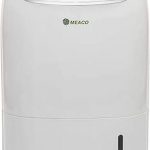
Our pick of the best dehumidifier is the Meaco Platinum Ultra Low Energy Dehumidifier, because it pulls a lot of water out of a damp house for very little power, with Meaco quoting up to 25 litres a day from 270 watts. For bedrooms and nurseries, go for the Meaco MeacoDry ABC Range Dehumidifier, which is quiet enough to sleep beside at a quoted 35 to 40 dB.
DIY Works is reader supported. If you buy through our links we may earn a commission, which never changes what we recommend. How we make money.
Our Picks At A Glance
- Check price of Meaco Platinum Ultra Low Energy Dehumidifier
Best Overall
Meaco Platinum Ultra Low Energy DehumidifierMedium and large homes with ongoing damp or plenty of laundry
- Check price of Pro Breeze® Digital Dehumidifier
Best Value
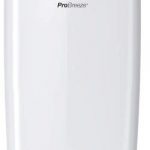
Pro Breeze® Digital DehumidifierDamp homes on a budget that need a big tank and a hose outlet
- Check price of EcoAir DD122 Dehumidifier
Best Desiccant
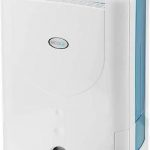
EcoAir DD122 DehumidifierCold garages, conservatories and quiet bedrooms needing light moisture control
- Check price of Meaco MeacoDry ABC Range Dehumidifier
Best Quiet
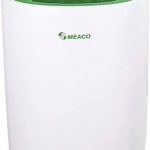
Meaco MeacoDry ABC Range DehumidifierBedrooms, hallways and living rooms where low noise comes first
- Check price of Pro Breeze 500 Dehumidifier
Best Small
Pro Breeze 500 DehumidifierWardrobes, small bedrooms, caravans and garden offices with mild condensation
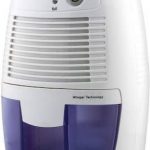
Where the machine will live matters more than the litres on the box. A heated house with mould in the corners, or a freshly plastered room like those on our own renovations, needs a compressor machine that pulls out plenty of water. A cold garage or conservatory suits a desiccant, which carries on in the cold where a compressor slows down. Noise is the other deal breaker, as a machine that's fine in a utility room will keep you awake at night.
The five here range from a whole-house machine down to a little unit for a wardrobe or caravan.
How We Tested These Dehumidifiers
Dehumidifiers earn their keep on our renovation projects, where a freshly plastered room or a damp, stripped-back shell is full of moisture that needs to go somewhere. We've also recommended them to tenants dealing with damp and mould.
That mix of jobs has shown us that some machines handle tough conditions far better than others, and some are happier ticking over in a bedroom. Each machine was judged on five things:
- Extraction: How much water it pulls out of the air and how quickly a damp room feels drier
- Noise: Whether you could sleep or work with it running
- Controls: How accurate the humidity sensor is and how easy the modes are to use
- Running costs: How much power the brand quotes for the extraction you get
- Portability: Weight, handles and wheels for moving it between rooms

We lean on Meaco machines for heavy moisture removal, particularly in rooms that have just been plastered, where the air turns damp very quickly. Our rougher site machine goes into the harsher spaces, and it collects a surprising amount of water after just a few hours.


Where a machine hasn't been through our own projects, we've used the manufacturer's figures for extraction, noise and tank size and said so in the write-up. Warranty support and build quality count too, alongside what you get for the price.
The Best Dehumidifiers We Recommend
The five dehumidifiers below cover damp homes, quiet bedrooms and cold garages. Extraction and noise figures are the manufacturers' own.
Best Overall
Meaco Platinum Ultra Low Energy Dehumidifier

Best for: Medium and large homes with ongoing damp or plenty of laundry
Check Price On AmazonThe Platinum sits at the top of Meaco's range and it's built for medium to large homes that need moisture pulling out every day. It's frugal for the amount of water it shifts, with Meaco quoting up to 25 litres a day from 270 watts, so you can leave it running for long stretches rather than in short, expensive bursts.
Four fan speeds and a DC motor let you match it to the job, and the top setting moves 280 cubic metres of air an hour when a room is properly wet. The lower speeds are quiet enough for a living room at a quoted 42 dB, rising to 50 dB flat out. There's a laundry mode for drying washing indoors, which is a handy use for it in winter when nothing dries on the line.
We lean on Meaco machines in freshly plastered rooms, and going on Meaco's own figures the Platinum is the one we'd choose for that performance across a whole house.
What we like
- Up to 25 litres a day according to Meaco
- Low 270 watt power draw for its extraction
- Four fan speeds with a top airflow of 280 cubic metres an hour
- Efficient DC motor
- Dedicated laundry mode
- Quietest settings sit around 42 dB
What to know
- A big outlay if you only need to dry one small room
- Top fan speed reaches 50 dB
Our verdict
For whole-house damp or a winter of drying washing indoors, the Meaco Platinum is the machine to have. It shifts a lot of water for very little power, so you can leave it running without dreading the bill, and the laundry mode is a genuine extra. It's a big spend for one small room, where the quieter MeacoDry ABC makes more sense.
Best Value
Pro Breeze® Digital Dehumidifier

Best for: Damp homes on a budget that need a big tank and a hose outlet
Check Price On AmazonPro Breeze makes several dehumidifiers, and this 20 litre model is the one we'd point most people towards for the money. It pulls out up to 20 litres a day according to the brand, and Pro Breeze says it uses less power than many machines at a similar price.
The built-in humidity sensor lets you pick a target anywhere between 30 and 50 percent, and the machine works harder or eases off to hold that level. Its 5.5 litre tank means fewer trips to the sink, and the continuous drainage hose in the box lets you run it straight into a drain or sink in a utility room or on a renovation.
Four wheels make it easy to move from room to room, and there's a 24 hour timer and an LED display. The catch is noise, with a quoted 60 dB that's noticeable in a bedroom at night.
What we like
- Up to 20 litres a day
- Humidity sensor adjustable from 30 to 50 percent
- Large 5.5 litre water tank
- Continuous drainage hose supplied
- Four wheels for moving between rooms
- Built-in 24 hour timer and LED display
What to know
- Loud at a quoted 60 dB
- Too noisy to leave running in a bedroom overnight
Our verdict
The Pro Breeze Digital Dehumidifier suits anyone who wants big-machine extraction and a drainage hose without paying Meaco Platinum money. It's a good fit for utility rooms, cellars and renovation work. If you need something quiet for a bedroom or living room, the Meaco MeacoDry ABC is the better buy.
Best Desiccant
EcoAir DD122 Dehumidifier

Best for: Cold garages, conservatories and quiet bedrooms needing light moisture control
Check Price On AmazonThe EcoAir DD122 is a desiccant dehumidifier, which means it uses an absorbent wheel to collect moisture rather than a compressor. That makes it quieter than most refrigerant machines and a better match for colder spaces such as garages and unheated conservatories, where compressor models struggle.
EcoAir quotes 34 dB and up to 7 litres a day, so it's a quiet, modest performer rather than a heavy lifter. You can switch between an economy mode that keeps power use down and a turbo mode for faster drying when a room is properly damp. At 6 kg it's light enough to carry upstairs, and EcoAir includes a 1 metre hose for continuous draining along with a two year warranty.
Expect less water in the tank than you'd get from the Meaco or Pro Breeze compressor machines, though EcoAir says the desiccant wheel never needs recharging or replacing.
What we like
- Desiccant design that copes with cold rooms
- Quiet at a quoted 34 dB
- Light at 6 kg
- Economy and turbo modes
- 1 metre continuous drainage hose included
- Two year warranty
What to know
- Removes far less water than the compressor machines here at up to 7 litres a day
Our verdict
Quiet running and a design that copes with the cold are what you're paying for here, rather than raw extraction. That makes the EcoAir DD122 a strong match for a cold garage, a caravan or a bedroom with light condensation. A soaking renovation or a damp family home will outpace its 7 litres a day.
Best Quiet
Meaco MeacoDry ABC Range Dehumidifier

Best for: Bedrooms, hallways and living rooms where low noise comes first
Check Price On AmazonThe MeacoDry ABC brings much of Meaco's performance down to a lower price than the Platinum. It comes in green, black, white, silver or blue, so you're not stuck with a white box in the corner.
Meaco says it's the quietest compressor dehumidifier on the market, with noise of 35 dB on the low setting and around 40 dB at full power. That puts it close to the desiccant EcoAir on noise while extracting more water, at up to 12 litres a day according to Meaco.
The controls are simple buttons, and you get automatic, timer and laundry modes. There are no wheels, so you'll be carrying it from room to room by hand.
What we like
- Up to 12 litres a day according to Meaco
- Quoted noise of 35 to 40 dB
- Choice of green, black, white, silver or blue
- Automatic, timer and laundry modes
- Simple push-button controls
- Low running costs for long use
What to know
- No wheels for moving it between rooms
Our verdict
Light sleepers and anyone putting a dehumidifier in a nursery or open-plan living space should start here. Meaco's quoted 35 to 40 dB is low enough that you won't be tempted to switch it off, and it extracts more water than the EcoAir DD122 at a similar noise level. Be ready to carry it, as there are no wheels.
Best Small
Pro Breeze 500 Dehumidifier

Best for: Wardrobes, small bedrooms, caravans and garden offices with mild condensation
Check Price On AmazonThe Pro Breeze 500, sold as the Pro Breeze Mini, is the smallest machine in our list and it's aimed at small spaces with light condensation. Pro Breeze quotes up to 250 ml of water a day, collected in a 500 ml tank, so it can run for a while between emptying.
It's small and light enough to sit in a wardrobe, on a shelf in a garage or in the corner of a caravan. The brand quotes 33 dB, which is quiet enough to leave running overnight. When the tank fills, an indicator light comes on and the machine shuts off by itself.
Don't expect it to dry a damp room, a pile of washing or fresh plaster. It takes the edge off mild condensation in a small space, and that's where it belongs.
What we like
- Up to 250 ml a day according to Pro Breeze
- Quiet at a quoted 33 dB
- Automatic shut-off and full tank light
- Light enough to carry with one hand
- Fits in wardrobes, caravans and small rooms
What to know
- Far too small for a damp room or drying laundry
Our verdict
Think of the Pro Breeze 500 as a fix for small spaces rather than a damp room. In a wardrobe, box room, caravan or garden office with musty air, it quietly takes the edge off the condensation and switches itself off when the tank is full. Once mould is on the walls, the Pro Breeze Digital Dehumidifier is the step up.
Choosing The Right Dehumidifier
The right dehumidifier depends on how damp the room is, how cold it gets and whether you can live with the noise. A machine that copes brilliantly with a wet renovation can be unbearable in a bedroom, and a quiet small unit won't touch a mould problem in a family home. Here's what to weigh up before you buy.
Compressor Or Desiccant
Compressor dehumidifiers, also called refrigerant models, draw air over cold coils so the moisture condenses and drips into the tank. They pull out the most water in a heated home and they're the type to use on renovations. The Meaco Platinum, Pro Breeze Digital and MeacoDry ABC all work this way.
Desiccant dehumidifiers, like the EcoAir DD122, use an absorbent wheel instead. They keep working in cold spaces where compressor coils struggle, and they're lighter and quieter than most compressor machines. They extract less water, so they suit garages, conservatories and smaller rooms better than a damp house.
Extraction Rate And Room Size
Extraction is quoted in litres a day, and the figures are measured in warm, humid test conditions, so a real room gives you less. Buy for the problem you have rather than the floor area alone. A cold, damp house with mould on the walls needs a bigger machine than a well-heated flat with a bit of window condensation.
Fresh plaster and wet screed release a lot of water, which is why a larger machine suits renovation work. Give the plaster a chance to firm up with a window open before you seal the room and run a dehumidifier hard, because drying it too fast is one of the reasons new plaster cracks. Our guide on plaster drying times has more on this.
Noise Levels
Noise is quoted in decibels, and every few decibels makes a real difference to how the machine sounds in a quiet room. Anything in the 30s is easy to sleep beside, while a machine around 60 dB is better kept in a utility room or a space you're not sitting in. Check the figure for the speed you'll actually run, as many brands quote the lowest setting.
Tank Size And Drainage
A small tank on a damp day means emptying it several times, and once it's full the machine stops. A larger tank or a continuous drainage hose fixes that. The hose matters most on a renovation or in a cellar, where the machine runs for days and nobody is around to empty it.
Humidity Control And Modes
A built-in humidistat lets you set a target and leaves the machine to switch itself on and off around it, which saves power and stops the room getting uncomfortably dry. Laundry modes run the fan harder to dry washing, and timers are handy for running the machine while you're out. Dehumidifiers deal with the moisture in the air, so pair one with a mould remover for walls and ceilings if mould is already growing.
Common Questions About Running A Dehumidifier
Where is the best place to put a dehumidifier?
The best place for a dehumidifier is the dampest room in the house, set away from walls and furniture so air can flow freely around it. Keep the doors and windows closed while it runs so it isn't trying to dry the outdoors. In a damp hallway or landing, a central spot lets one machine draw moisture from the rooms around it.
Does a dehumidifier get rid of mould?
A dehumidifier stops mould coming back by lowering the moisture it needs to grow, but it won't remove mould that's already on the walls. Clean existing mould off first with a proper mould remover, deal with any leak or ventilation problem, then run the dehumidifier to keep the air dry. Anti-mould paint adds extra protection in kitchens and bathrooms.
Should you run a dehumidifier all day?
You don't need to run a dehumidifier all day if it has a built-in humidistat. Set the target humidity and it switches itself on and off to hold that level, which keeps running costs down. Without a humidistat, run it for a few hours at a time in the dampest room and keep an eye on the tank and the condensation on your windows.
Can a dehumidifier help dry new plaster?
A dehumidifier helps new plaster dry, but it shouldn't be used to rush it. Leave the plaster to firm up naturally with a window open at first, as drying too fast causes cracking. Once the surface has lightened and firmed up, a dehumidifier on a moderate setting helps pull the remaining moisture out before decorating.
Which dehumidifier would you use in a freshly plastered room?
We trust Meaco machines in freshly plastered rooms, where the air turns damp very quickly, and the Meaco Platinum Ultra Low Energy Dehumidifier is our pick for that performance across a whole house. Let the plaster firm up with a window open before you seal the room and run a dehumidifier hard, as drying it too fast is one reason new plaster cracks.
Is the Pro Breeze Digital Dehumidifier worth buying over the Meaco Platinum?
The Pro Breeze Digital Dehumidifier is worth it if you want big-machine extraction and a drainage hose without paying Meaco Platinum money. Pro Breeze quotes up to 20 litres a day against Meaco's 25. The catch is a quoted 60 dB, which is noticeable in a bedroom at night, so the Meaco MeacoDry ABC suits quiet rooms better.
Will the Pro Breeze 500 dry out a damp room?
No, the Pro Breeze 500 is the smallest machine in our list and takes the edge off mild condensation in small spaces such as wardrobes, caravans and garden offices. Pro Breeze quotes up to 250 ml of water a day. Once mould is on the walls, the Pro Breeze Digital Dehumidifier is the step up.
Is a desiccant dehumidifier better for a cold garage?
Yes, a desiccant model such as the EcoAir DD122 keeps working in cold spaces where compressor coils struggle, so it suits garages and unheated conservatories. The trade-off is extraction, with EcoAir quoting up to 7 litres a day against up to 20 litres from the Pro Breeze Digital and up to 25 from the Meaco Platinum.
Our Pick Of The Best Dehumidifiers
The Meaco Platinum Ultra Low Energy Dehumidifier is the machine we'd buy for a damp home. It shifts plenty of water for a low power draw, so leaving it on for long spells won't hurt the bill. The Pro Breeze Digital Dehumidifier does a similar job for less money if you can put up with the noise.
For bedrooms, the Meaco MeacoDry ABC is the quiet choice, while the EcoAir DD122 suits cold garages and the Pro Breeze 500 handles wardrobes and caravans.
Richard has spent years renovating properties and turning them into rentals and Airbnbs. Like a lot of people he started out as a beginner, and these days there isn't much DIY he won't take on.