The Best Knotting Solutions For Sealing Knots
Five knot sealers we'd brush on before priming so resin doesn't bleed yellow through fresh paint.

Our quick verdict
Our pick of the best knotting solution is the Rustins White Knotting, a pure shellac sealer for indoor and outdoor timber that's the one to use under white or pale paint. Rustins' amber version sealed the knots on our new skirting in two coats, and the large bottle covers a whole house of woodwork. If you're priming bare timber anyway, the Ronseal Knot Block seals knots in the same coat.
DIY Works is reader supported. If you buy through our links we may earn a commission, which never changes what we recommend. How we make money.
Our Picks At A Glance
- Check price of Rustins White Knotting
Best Overall
Rustins White KnottingSealing knots on new skirting, frames and outdoor timber before painting
- Check price of Ronseal Colron Knotting Solution
Best All-Rounder
Ronseal Colron Knotting SolutionSmall indoor jobs where you want the brush in the pack
- Check price of Ronseal Knot Block
Best Primer
Ronseal Knot BlockNew skirting, frames and architraves that need priming and undercoating too
- Check price of Liberon Knotting Pale
- Check price of Centurion Patent Knotting Sealer
Best Value Runner-Up
Centurion Patent Knotting SealerTreating lots of knots inside and out on a tight budget
Treating every knot in a house full of new timber is a different job from dabbing one that's bled through old gloss. On bare wood a knot blocking primer saves a step, and a bottle of knotting suits the odd repair. What goes on top matters as well, since dark shellac vanishes under paint but leaves a ring under clear varnish. Cheaper sealers also need extra coats.
We sealed a lot of knots during a full renovation of our own. The five below run from small indoor bottles to bigger ones that handle outdoor timber.
How We Tested These Knotting Solutions
During a recent house renovation we replaced every door frame, architrave and skirting board, which meant a lot of new softwood with a lot of knots. That gave us the chance to try several knotting solutions side by side, brushing each one onto the knots before any primer or paint went on.
We also treated the knots on an outdoor wooden seating area, where sun and rain push resin out faster than indoors. So far there's been no seepage from any of the knots we sealed out there.

Alongside our own use, we weighed each product up against the same points:
- Effectiveness: whether it stopped resin bleeding through the paint
- Application: how easily it brushed onto the knot and how many coats it needed
- Compatibility: indoor or outdoor use, and whether it suits clear finishes as well as paint
- Drying time: how soon we could prime or paint over it
- Value: the amount in the bottle or tin against what it costs to treat a room full of knots
Where a figure such as a drying time comes from the manufacturer rather than our own use, we've said so in the write-up.
The Best Knotting Solutions We Recommend
All five are brushed straight onto the knot before priming. We've said where a product needed a second coat.
Best Overall
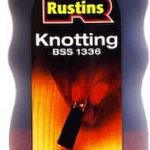
Rustins White Knotting

Best for: Sealing knots on new skirting, frames and outdoor timber before painting
Check Price On AmazonRustins keeps things simple here. It's a pure shellac formula designed specifically to seal knots in wood, and it's suitable for interior and exterior timber, so the same bottle covers your skirting boards and a garden bench.
It brushes on easily with a small brush. On our renovation we used Rustins' standard amber knotting on the new skirting, which is the bottle in the photo above, and the knots needed two coats to seal properly, so let the first dry and go over them again. The white version listed here does the same job and is the one to pick under white or pale paint.
The 300 ml bottle goes a long way, which matters when you're working through every frame and board in a house.
What we like
- Pure shellac formula made for sealing knots
- Large 300 ml bottle for a whole house of woodwork
- Brushes on easily
- Suitable for interior and exterior timber
What to know
- The amber version needed two coats on our renovation knots
- Costs more than the Liberon and Centurion sealers
Our verdict
For a renovation full of new softwood, inside or out, Rustins is our first choice. We used the amber version on our new skirting, and the large bottle covers a lot of woodwork. It isn't the cheapest, and you'll want two coats on resinous knots, so allow for that in your timings. If the timber's bare and needs priming anyway, Ronseal Knot Block saves a step.
Best All-Rounder
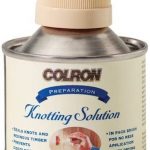
Ronseal Colron Knotting Solution

Best for: Small indoor jobs where you want the brush in the pack
Check Price On AmazonColron is Ronseal's dedicated knotting solution, made to seal knots and resinous timber permanently. What sets it apart is the brush in the pack. There's no digging out one of your good paint brushes and cleaning it afterwards, which keeps things tidy when you're only dotting a few knots.
Ronseal describes it as low odour and fast drying, and it's there to stop knots discolouring the paint above them. It's an interior product only, so it won't do for fences, sheds or garden furniture.
The bottle is a lot smaller than the Rustins one, which makes Colron dear if you've got a whole house of skirting and architraves to treat. For a door frame or a couple of new shelves, it's handy to have in the drawer.
What we like
- Brush supplied in the pack
- Low odour according to Ronseal
- Quick drying formula
- Stops knots discolouring the top coat
What to know
- Interior use only
- Much smaller bottle than Rustins, so it works out dear on big jobs
Our verdict
Colron suits small indoor jobs where the built-in brush saves mess and the bottle size doesn't hold you back. For a full renovation or anything outdoors, Rustins White Knotting is better value and covers exterior timber. If you're priming new woodwork anyway, Ronseal Knot Block saves a step.
Best Primer
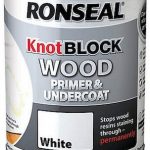
Ronseal Knot Block

Best for: New skirting, frames and architraves that need priming and undercoating too
Check Price On AmazonKnot Block works differently from the rest of this list. Rather than a separate sealer dabbed onto each knot, it's a wood primer and undercoat that seals knots and resin as part of the same coat. Ronseal calls it everything you need in a tin and guarantees it'll block wood knots.
That makes it a time saver on bare timber such as new skirting, door frames and architraves, where you'd be priming the whole length anyway. According to Ronseal it won't yellow, crack or peel, it helps the top coat stick and last longer, and it's touch dry in 30 minutes.
The trade-off is cost. A tin of primer is more expensive up front than a bottle of knotting, though you're also buying the primer and undercoat in the same purchase.
What we like
- Knot sealer, primer and undercoat in one
- Permanently seals knots and resin according to Ronseal
- Won't yellow, crack or peel according to the brand
- Touch dry in 30 minutes according to Ronseal
- Gives the top coat a sound base to grip
What to know
- Costs more up front than a bottle of knotting solution
- Overkill if you only have a few knots to touch in
Our verdict
Bare new woodwork is where Knot Block saves real time, because one product takes you from raw timber to a base ready for the top coat. It costs more up front than a bottle of knotting. For spot-treating a handful of knots on timber that's already primed, a dedicated sealer is cheaper and simpler.
Best Value
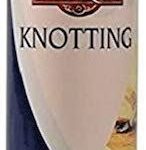
Liberon Knotting Pale

Best for: Budget knot sealing and timber that's getting a clear varnish
Check Price On AmazonLiberon Knotting Pale is one of the cheapest knotting solutions we'd still put on our own woodwork. Liberon says it's suitable for all types of wood, touch dry in 15 minutes and ready to paint over after two hours, so you can knot in the morning and prime the same day.
Its pale colour is the reason to choose it over the others. A darker knotting can leave a visible patch under a clear finish, whereas Liberon's is made to go under clear varnishes as well as paint, which suits stripped or natural timber.
The downside we found in our testing was the smell. It gave off quite a strong odour while we were brushing it on, so open the windows and keep the door to the rest of the house shut.
What we like
- Touch dry in 15 minutes according to Liberon
- Ready to paint over after two hours
- Pale colour that suits clear varnished timber
- Effective at preventing seepage from knots according to Liberon
- One of the cheapest sealers on this list
What to know
- Strong odour during application in our testing
Our verdict
Clear varnished timber is the job Liberon Knotting Pale does better than the rest, and it's also one of the cheapest sealers here. The strong smell when we brushed it on is the catch, so ventilate the room well. For indoor work where odour matters, Ronseal Colron is described as low odour.
Best Value Runner-Up
Centurion Patent Knotting Sealer

Best for: Treating lots of knots inside and out on a tight budget
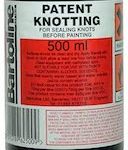
Check Price On AmazonCenturion's sealer comes in a large 500 ml tin, and it's an affordable way to stock up for a big job. It's made to go on before priming and undercoating, and it brushes onto the knots easily.
It works on interior and exterior timber and dries quickly, which helps when you're moving along a run of fence rails or a full set of new door linings. Like the others, its job is to stop knots discolouring the paint on top.
Plan for more than one coat. Centurion needs multiple coats for the best result, so build that into your timings, especially outdoors where a sealed knot faces more heat and weather than one behind a sofa.
What we like
- Large 500 ml tin for plenty of knots
- Suitable for interior and exterior use
- Fast drying formula
- Easy brush application
- Prevents discolouration of the top coat
What to know
- Needs multiple coats for the best results
Our verdict
Centurion makes sense when you've got a lot of knots to treat and not much to spend, as the 500 ml tin keeps a whole house of woodwork affordable. Build extra coats into your plans, because one won't do. If you'd rather a brand we've used on our own skirting, Rustins White Knotting is the alternative.
Choosing A Knotting Solution For Your Woodwork
Every product above stops knots bleeding through paint, but they suit different jobs. Before you buy, think about where the wood is, what's going on top of it and how many knots you've got to treat.
Knotting Sealer Or Knot Blocking Primer
A dedicated knotting solution such as Rustins, Colron, Liberon or Centurion is brushed onto each knot on its own, then the whole piece is primed afterwards. It's the right choice for spot-treating timber that's already been primed or painted, or for the odd knot that's started to bleed through old paint.
A knot blocking primer such as Ronseal Knot Block covers the whole surface and seals the knots in the same coat. On bare new skirting, architraves and door frames, that saves a step. Once it's dry, the top coat can go straight on, and our guide to the best paint for skirting boards covers which finishes suit each room.
Indoor And Outdoor Timber
Knots outdoors get hotter in the sun, and heat draws resin out faster. Check the label before using a knotting product on fences, garden furniture or cladding. Rustins and Centurion are suitable for exterior timber, whereas Colron is for interior use only.
Once the knots are sealed outside, finish with a coating made for the weather, and our pick of the best exterior wood paints covers sheds, cladding and garden furniture.
Paint Or Clear Varnish On Top
Under paint, the colour of the knotting doesn't matter, because primer and top coat hide it. Under a clear varnish or oil it does, as a dark knotting leaves a ring around each knot. A pale product such as Liberon Knotting Pale is the one to use on timber you want to keep looking natural.
White and pale knotting also helps under white gloss, since there's less chance of a shadow showing through thin coats. Resin isn't the only reason white woodwork goes yellow, and our guide on stopping gloss paint going yellow explains the other causes.
Bottle Size And Number Of Coats
A small bottle with a built-in brush is fine for a door frame. For a full renovation with every skirting board and architrave replaced, a 300 ml bottle like Rustins or the 500 ml Centurion tin works out cheaper and saves a trip back to the shop halfway through.
Factor in coats as well. Rustins took two coats on our knots and Centurion needs more than one, so a product that seems cheap per bottle goes less far than you'd think.
Prep Before You Seal
Knotting needs clean, dry timber to bond. Sand the knot lightly, wipe off the dust and scrape away any resin that has already beaded on the surface before brushing the sealer on. Fill any splits or nail holes with one of the best wood fillers once the knotting is dry, then sand and prime the lot together.
Questions About Sealing Knots In Wood
Do you need knotting solution before painting wood?
Yes, knotting solution is needed before painting softwood with visible knots. Without it, resin from the knots seeps through the primer and top coat and leaves yellow or brown rings, which can appear months after painting. Brush the knotting onto each knot, let it dry and then prime as normal. A knot blocking primer does the same job across the whole surface.
How many coats of knotting solution do you need?
Most knots need one or two coats of knotting solution, and very resinous knots take two. On our renovation, Rustins knotting needed two coats to seal the knots on new skirting, and Centurion's sealer also needs more than one. Let each coat dry before the next, and check the knot isn't still tacky before you prime over it.
Can you use knotting solution under varnish?
You can use knotting solution under varnish, but choose a pale product so it doesn't leave a dark ring around each knot. Liberon Knotting Pale is made to go under clear varnishes. Darker shellac knotting is fine under paint, because the primer and top coat hide it completely, but it shows through a clear finish.
Why are knots showing through my paint?
Knots show through paint because resin in the knot seeps out and stains the coating, and heat from sunlight or radiators speeds it up. It happens when the knots weren't sealed before priming. Sand the affected area back, clean off any resin, apply two coats of knotting solution or a knot blocking primer, then repaint.
Is Ronseal Knot Block worth using instead of Rustins White Knotting?
It depends on whether the wood is bare. On new skirting, door frames and architraves you'd be priming every length anyway, so Ronseal Knot Block earns its higher price by sealing the knots in that same coat. Where the timber is already primed and you're only touching in a few knots, a bottle of Rustins does the job for less.
Can I use Ronseal Colron on a fence or shed?
No, Ronseal Colron is an interior product only, so it won't do for fences, sheds or garden furniture. Rustins White Knotting and Centurion Patent Knotting Sealer are both suitable for exterior timber. Colron suits small indoor jobs, since a brush comes in the pack, but its bottle is much smaller than the Rustins one.
Is the smell of Liberon Knotting Pale a problem?
It's manageable with the windows open. Liberon Knotting Pale had quite a strong smell when we brushed it on, so ventilate well and shut the door to the rest of the house while you work. We'd still put up with it on timber going under clear varnish, where its pale colour matters. For a stuffy room, Ronseal describes its Colron as low odour.
Should I buy the white or the amber Rustins knotting?
Buy the white Rustins knotting under white or pale paint. Our photos show Rustins' standard amber knotting, and it sealed the knots on our new skirting in two coats. White and pale knotting also helps under white gloss, since there's less chance of a shadow showing through thin coats. Under a clear finish, Liberon Knotting Pale is the better pale option.
Our Pick For Sealing Knots Before Painting
Rustins White Knotting is our first choice. Rustins' shellac knotting sealed the knots on our new skirting in two coats, and the white version comes in a bottle big enough for a full house of woodwork, inside or out. Ronseal Knot Block is the alternative for bare timber, sealing knots while it primes and undercoats.
For a budget option or wood that's getting clear varnish, Liberon Knotting Pale is the one to buy. Whichever you choose, sealing the knots takes minutes and saves repainting yellowed woodwork later, so it's worth reading our guide on painting skirting boards before you start.

Eddie spent five years as a self-employed painter and decorator before going part time to become one of the main writers at DIY Works. From garden fences to mist coats on fresh plaster, painting and decorating is his speciality.