The Best Lawn Scarifiers To Breathe New Life Into Your Grass
Six scarifiers that rip out thatch and moss so your grass can breathe again.

Our quick verdict
Our pick of the best lawn scarifier is the Bosch AVR 1100 Verticutter, a light machine that's easy to steer round a typical garden and uses Bosch's Jet Collect airflow to push the thatch into the box instead of leaving it on the lawn. If you want to spend less, the BLACK+DECKER GD300 Lawn Scarifier still digs in with metal tines rather than plastic.
DIY Works is reader supported. If you buy through our links we may earn a commission, which never changes what we recommend. How we make money.
Our Picks At A Glance
- Check price of Bosch AVR 1100 Verticutter
Best Overall
Bosch AVR 1100 VerticutterSmall to medium lawns where a light machine and clean collection matter
- Check price of Einhell Lawn Scarifier GE-SC
Best Cordless
Einhell Lawn Scarifier GE-SCEinhell battery owners with medium lawns out of cable reach
- Check price of Hyundai HYSC210 Lawn Scarifier and Aerator
Best Petrol
Hyundai HYSC210 Lawn Scarifier and AeratorLarge lawns and multiple gardens with no power supply nearby
- Check price of BLACK+DECKER GD300 Lawn Scarifier
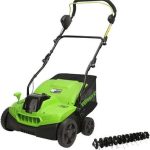
- Check price of Greenworks GD40SC36 Lawn Rake
Best Cordless Runner-Up
Greenworks GD40SC36 Lawn RakeSmall to medium lawns where compact storage and cordless use matter
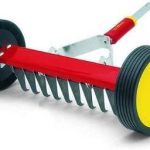
- Check price of Wolf Garten Multi-Change URM3
Best Manual
Wolf Garten Multi-Change URM3Small lawns needing light moss and thatch removal without power
Lawn size and the distance to a socket narrow this down fast. Corded handles a typical garden for the least money, cordless only pays off if you already run that brand's batteries, and petrol earns its fuel and servicing on big lawns with no power nearby. Steel blades outlast plastic ones, and a machine with a raking roller as well lets you go gently in spring and harder in autumn.
We scarify our own lawns and the rental gardens twice a year, and these six run from a hand-pushed rake to a petrol machine.
How We Put These Lawn Scarifiers To Work
Scarifying is a twice-yearly job across our own homes and the rental properties we run. We give the lawns a light pass in spring and a heavier one in autumn, so we've run plenty of machines over grass in very different states.
The amount of thatch that comes out depends on the lawn. In the two photos below, the first lawn gave up a fairly small amount, while the second was badly in need of it and ended up covered in debris.


Over the years that's covered cordless, corded, petrol and manual scarifiers. For each one we judged how easy it was to assemble from the box, how well it cut and collected, how simple the height adjustment was and how solidly it was built. Most machines have a lever on top for the working depth, and many let you swap the blade roller for a raking roller, as the next two photos show.


Where a new and improved model comes out, we try to get hold of it and put it to the test. The petrol and electric machines below are two that have been through our gardens.


For machines we haven't used ourselves, we've relied on the brand's figures for motor power, widths and blade counts, and we've said where that's the case. The length of each warranty and the price against what you get also counted towards the final ranking.
The Best Lawn Scarifiers We Recommend
The list runs from our top electric pick through cordless and petrol machines to a manual option for small lawns.
Best Overall
Bosch AVR 1100 Verticutter

Best for: Small to medium lawns where a light machine and clean collection matter
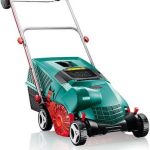
Check Price On AmazonThe Bosch AVR 1100 Verticutter was light and easy to use in our testing, which counts for a lot on a job where you're walking the lawn twice in opposite directions. Four height settings let you start high to lift the loose debris and then drop lower for the proper scarify, with a 1,100W motor driving the 14 steel blades.
What makes it stand out is the airflow system Bosch calls Jet Collect. It's designed to push the thatch into the collection box rather than leaving it on the lawn, which saves a lot of raking up afterwards. The working width is 32cm, which is quick enough for most suburban gardens while still getting round curved borders.
This is the newer, improved version of the machine, and it folds down so it doesn't take over the shed once the job's done.
What we like
- Light and easy to push in our testing
- 14 rotating steel blades
- 4 height settings
- Bosch's Jet Collect airflow is built to carry debris into the box
- 1,100W motor
- Folding design for storage
What to know
- Dearer than the corded BLACK+DECKER GD300
- 32cm width is narrower than the Hyundai and Einhell
Our verdict
The Bosch AVR 1100 is the scarifier we'd buy for a typical garden that gets scarified twice a year. It's easy to handle, and collecting as it goes means far less raking up afterwards. If your budget is tight, the BLACK+DECKER GD300 still has metal tines for less, and if the lawn is large or far from a socket, the Hyundai HYSC210 or Einhell GE-SC suits better.
Best Cordless
Einhell Lawn Scarifier GE-SC

Best for: Einhell battery owners with medium lawns out of cable reach
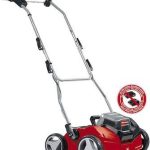
Check Price On AmazonThe Einhell GE-SC takes two 18V Power X-Change batteries, which lets it run without a cable trailing across the lawn. Einhell says it'll cover between 190 and 400 square metres on a charge, depending on the battery capacity you fit.
At 35cm it's a little wider than the Bosch, so a medium lawn takes fewer passes, and Einhell quotes 16 blades with a maximum cutting depth of 9mm. Large all-terrain wheels cope with bumpy ground, and the handle adjusts so taller users aren't stooping, though you only get 3 cutting heights to choose from.
Batteries and a charger aren't included. If you already own Einhell tools that's no issue, but buying two batteries from scratch makes it a far more expensive machine.
What we like
- No cable to drag across the lawn
- Up to 400 square metres per charge according to Einhell
- 16 blades and a 35cm working width
- Large all-terrain wheels
- Height-adjustable handle
What to know
- Batteries and charger sold separately
- Only 3 cutting heights
Our verdict
Owners of Einhell Power X-Change batteries get the most from the GE-SC, since the bare machine is all they need to buy. Starting from scratch, two batteries and a charger push the cost up quickly. In return you get a wider cut than the Bosch and no cable to work around, which suits a medium lawn out of reach of a socket.
Best Petrol
Hyundai HYSC210 Lawn Scarifier and Aerator

Best for: Large lawns and multiple gardens with no power supply nearby
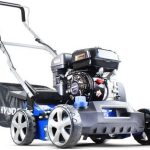
Check Price On AmazonThe Hyundai HYSC210 runs on a 212cc 4-stroke petrol engine, and it's the machine for big lawns or anyone scarifying several gardens in a day. In our testing it started easily and was more frugal with fuel than we expected for its engine size.
We were also surprised by how light it felt to push for a petrol machine. The 40cm width gets round a big lawn quickly, and its 18 hardened steel blades have 5 cutting heights to work through. A 45 litre grass collector comes with it, and the soft grip handles fold for storage.
Assembly from the box was straightforward. It's the most expensive scarifier in this list, and the engine will need fuel and servicing like a petrol mower.
What we like
- Started easily and used less fuel than expected in our testing
- Felt light to push for a petrol machine
- Generous 40cm working width
- 18 hardened steel blades
- 5 cutting heights
- 45 litre grass collector
- Simple to assemble from the box
What to know
- Most expensive scarifier in this roundup
- Engine needs fuel and regular servicing
Our verdict
The Hyundai HYSC210 is our choice for large lawns, rural gardens without power or anyone looking after several properties. It's wide, strong and easy to start. For a normal suburban lawn it's more than you need, and the Bosch AVR 1100 or Greenworks GD40SC36 are lighter on the wallet and easier to store.
Best Budget
BLACK+DECKER GD300 Lawn Scarifier

Best for: Small to medium lawns on a tight budget
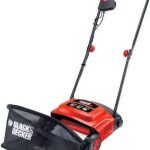
Check Price On AmazonThe BLACK+DECKER GD300 is a corded scarifier with a 600W motor, aimed at small and medium lawns. It keeps the cost down without falling back on plastic tines, using 3 rows of metal tines instead, which is the main reason we'd pick it over other cheap machines.
Three raking heights run from 2mm to 8mm, so it's set up more for pulling out moss and thatch than for deep work. The collection box is big for a machine at this price, and at 7kg it's easy to carry from the shed and lift over a step.
A safety lock-off switch stops it starting by accident. It doesn't have the power of the other machines in this list, so a badly neglected lawn will take more passes.
What we like
- Three rows of metal tines rather than plastic
- Big collection box for the price
- Light at 7kg
- Three raking heights from 2mm to 8mm
- Safety lock-off switch
What to know
- Less powerful than the other scarifiers here
- Shallow raking depth for heavy thatch
Our verdict
Metal tines at a budget price are what set the BLACK+DECKER GD300 apart, and it's a sensible pick for a small or medium lawn that gets regular attention. Its shallow raking depth and smaller motor show on a lawn with years of thatch, where the Bosch AVR 1100 and its bigger motor make shorter work of it.
Best Cordless Runner-Up
Greenworks GD40SC36 Lawn Rake

Best for: Small to medium lawns where compact storage and cordless use matter
Check Price On AmazonWe had plenty of use out of the predecessor to the Greenworks GD40SC36, and this improved version adds features that make it easier to use and store. It runs on Greenworks batteries through a brushless motor, which is built for both power and a longer working life. Greenworks sells it as a bare tool and in kits with a battery and charger, so check which version a listing offers before you buy.
The 36cm working width suits small and medium lawns, and a lever at the front sets one of 5 height positions. A push button starts it, and the 45 litre collection box means fewer trips to the green bin.
The handles fold right down, so it tucks into a small shed or under the stairs in a garage. Greenworks backs it with a three year warranty.
What we like
- Improved on the earlier model we used a lot
- Brushless motor
- 5 height positions set with a front lever
- 45 litre collection box
- Folds down compactly for storage
- Push button start
- Three year warranty
What to know
- Relatively expensive compared with the alternatives
Our verdict
Storage is where the Greenworks GD40SC36 wins people over, as the handles fold right down and it takes up little room once the job's done. It's a good fit for a small or medium lawn, especially if you already run Greenworks batteries. Einhell battery owners are better served by the GE-SC.
Best Manual
Wolf Garten Multi-Change URM3

Best for: Small lawns needing light moss and thatch removal without power
Check Price On AmazonThe Wolf Garten URM3 is a manual scarifier, so you push it across the lawn yourself. That limits it to small gardens and lighter moss and thatch removal, but it's the cheapest scarifier here that we'd actually recommend buying.
Its steel blades work with a pendulum action, letting them sink into moss and thatch and then glide over the grass, which pulls more out than a basic spring-tine rake. The working width is 30cm.
The head is part of Wolf Garten's Multi-Change system, so you'll need to buy a handle separately. That handle clicks onto more than 50 tool heads in the range, and it has 11 positions. Wolf Garten backs the URM3 with a 10 year warranty.
What we like
- No fuel, battery or cable needed
- Pendulum action lets the steel blades dig into thatch
- 10 year warranty
- Handle fits more than 50 Multi-Change tool heads
- 11 handle positions
What to know
- Handle sold separately
- Hard work and less effective than a powered machine
Our verdict
For a small lawn or front garden with light moss, the Wolf Garten URM3 does the job with no cable, fuel or servicing, and the 10 year warranty shows how long it's built to last. It's hard work on anything bigger, and you'll need a Multi-Change handle if you don't already own one, so budget for that too.
What Matters When Buying A Lawn Scarifier
Scarifying tears out the thatch and moss that smother a lawn, letting air and water back to the roots. Straight after a pass, the lawn looks rough, and it takes a few weeks of growth to look better than it did before. These are the things we check before buying a scarifier.

Electric, Cordless, Petrol Or Manual
Corded electric scarifiers are the most common, as they're cheap and need almost no maintenance. Cordless machines lose the cable but rely on batteries, so they make most sense if you already own batteries from the same brand. Petrol scarifiers are the choice for large lawns and gardens with no socket nearby, at the cost of fuel and servicing, and our guide to servicing a petrol lawnmower covers much of the same engine care.
Manual scarifiers are cheapest and simplest, but they're only practical on small lawns.
Scarifier Blades Or Raking Tines
A scarifier uses flat steel blades that slice into the thatch and the top of the soil, while a lawn raker uses springy wire tines that comb moss and debris out more gently. Several machines in this list come with both rollers, which lets you rake in spring and scarify properly in autumn. Avoid plastic blades or tines, as they wear quickly.

Blades dull over time, so check that replacement rollers are available for the model you're buying.
Working Depth And Width
Lifting moss and loose thatch only needs a shallow setting, but a proper scarify cuts into the top of the soil. A machine with several height positions lets you do both, starting high and lowering the blades on later passes.
Working width decides how quickly you get round. A 40cm machine such as the Hyundai covers a big lawn faster, while something nearer 30cm handles curved borders and tight corners more easily.
Collection Box Size
A scarifier pulls out a surprising amount of material, and a box that's too small means stopping every few metres. Most scarifier boxes hold between 30 and 60 litres, and a bigger box is heavier to lift when full. Whatever's left on the lawn afterwards can be cleared with one of the best garden vacuums, which shred the debris for the compost heap.
When And How To Scarify
Spring and early autumn are the times to scarify in the UK, with a lighter pass in spring and the heavier work in autumn when the grass has time to recover. Avoid winter and the height of summer, when the lawn is stressed.

These are the steps we recommend:
- Treat any moss with a lawn moss killer a couple of weeks beforehand, using one from our pick of the best moss killers for lawns.
- Mow the lawn short a few days before so the blades reach the thatch.
- Make a first pass on a high setting to lift loose debris.
- Lower the blades and go over the lawn again, then make a second pass at right angles to the first.
- Rake up or vacuum what's left and empty the box as you go.
- Overseed any thin or bare areas with one of the best grass seeds for UK lawns, then feed and water.
Lawn Scarifying Questions From Our Readers
What is the difference between a scarifier and a lawn raker?
A scarifier uses rigid steel blades that cut through thatch and into the top of the soil, while a lawn raker uses flexible wire tines that comb out moss and loose debris more gently. Raking is a lighter job for spring, and scarifying is the deeper treatment for autumn. Many electric machines come with both rollers so you can swap between the two.
How often should you scarify a lawn?
Most UK lawns benefit from scarifying once or twice a year. We give our lawns a light pass in spring and a heavier scarify in autumn, which keeps thatch under control without stressing the grass. A lawn with very little thatch can go a year between treatments, while a mossy, neglected lawn needs the full autumn scarify to recover.
Should you kill moss before scarifying?
Yes, treat moss with a moss killer a couple of weeks before scarifying, then wait until it has turned black or brown. Scarifying live moss spreads the spores around the lawn, whereas dead moss comes out cleanly and leaves bare soil ready for seed. Check the moss killer's instructions for how long to wait before you scarify.
Why does my lawn look worse after scarifying?
A lawn always looks thin and scruffy straight after scarifying because the blades have ripped out the thatch and moss that were bulking it up. That's normal. Overseed any bare areas, feed the lawn and keep it watered, and the grass will thicken up over the following weeks, looking healthier than it did before you started.
Which scarifier would you buy again for a small lawn?
The Bosch AVR 1100 Verticutter is the one we'd buy for a small to medium lawn. It's light to push, and its Jet Collect airflow carries thatch into the collection box. If the budget is tight, the BLACK+DECKER GD300 keeps metal tines at a lower price, though it has less power than the other machines in our list.
Is the Hyundai HYSC210 too much machine for an ordinary garden?
For a normal suburban lawn, yes. The Hyundai HYSC210 is the most expensive scarifier in our list, with a 212cc petrol engine that needs fuel and servicing. It earns its place on large lawns, rural gardens with no socket nearby or anyone scarifying several properties. Smaller lawns are better served by the Bosch AVR 1100.
Is the Einhell GE-SC worth buying if I don't own Einhell batteries?
No, because the Einhell GE-SC is sold without batteries or a charger. It needs two 18V Power X-Change batteries, so starting from scratch pushes the cost up quickly. Owners of those batteries get the most from it. Everyone else avoids the extra spend with a corded machine such as the Bosch AVR 1100.
Can a manual scarifier like the Wolf Garten URM3 cope with a mossy lawn?
It copes with light moss and thatch on a small lawn or front garden. The steel blades work with a pendulum action that sinks into moss and thatch, so it pulls out more than a basic spring-tine rake. It's hard work on anything bigger, and the handle is sold separately, so a larger lawn needs a powered scarifier.
Which Lawn Scarifier We'd Choose
The Bosch AVR 1100 Verticutter is the lawn scarifier we'd recommend for most gardens, because it's light to push and collects the thatch as it goes rather than leaving it for you to rake up. The Hyundai HYSC210 is worth the extra for a large lawn or a garden without a socket.
On a budget, the BLACK+DECKER GD300 still uses metal tines, and the Wolf Garten URM3 is the manual choice for small lawns.

Archie is our gardening specialist. He started out as an apprentice at a gardening firm, built up his own knowledge from there and now writes most of our garden content.