The Best Paint Rollers For Walls And Woodwork
Full-size and mini rollers for smooth ceilings and rough render as well as upcycled furniture.

Our quick verdict
Our pick of the best paint roller is the Stanley Decorating Paint Roller Set, the kit we used on our new plaster ceiling, with a 9 inch roller for walls and ceilings and a mini roller for woodwork in the same box. For ceilings in a standard-height room, the Harris 430 Easy Reach lets you roll from the floor without dragging a stepladder around.
DIY Works is reader supported. If you buy through our links we may earn a commission, which never changes what we recommend. How we make money.
Our Picks At A Glance
- Check price of Stanley Decorating Paint Roller Set
Best Overall
Stanley Decorating Paint Roller SetAnyone starting from scratch who wants rollers for walls and woodwork
- Check price of PRODEC Tiger Medium Pile Roller
Best Value
PRODEC Tiger Medium Pile RollerEmulsion and masonry paint on smooth or lightly textured surfaces
- Check price of Harris 430 Easy Reach
Best For Ceilings
Harris 430 Easy ReachCeilings and high walls in rooms with standard ceiling heights
- Check price of Wagner HandiRoll Non Drip
Best Professional
Wagner HandiRoll Non DripLarge rooms and high ceilings where refilling a tray slows you down
- Check price of Cottam Mini Paint Roller Tray Kit
Best Mini
Cottam Mini Paint Roller Tray KitSmooth finishes on cupboards, doors and upcycled furniture
- Check price of Hynec Mini Paint Roller Kit
Best Mini Runner-Up
Hynec Mini Paint Roller KitUpcycling and small decorating jobs where you need every accessory
Pile length does more for your finish than the frame it sits on. A short pile or foam sleeve suits smooth woodwork, a medium pile handles most walls and ceilings, and a long pile is what pushes paint into pebbledash and render.
Reach is the next thing to sort. A pole on a threaded handle is the cheap way to do ceilings, while built-in extending handles are tidier but stop shorter. We've rolled everything from new plaster ceilings to pebbledash, and the six here cover 9 inch rollers, mini rollers and complete kits.
How We Tested These Paint Rollers
We test in our own homes, on renovation projects and in the rentals and Airbnbs we manage, and over the years we've tried a wide selection of rollers on walls, ceilings, masonry and other surfaces.
The photos below show the Stanley roller set on a ceiling of new plaster, and our guide to painting new plaster with a mist coat covers that first coat in detail.


We've also used rollers with emulsion on walls and ceilings and with gloss paint on a mini roller for upcycling furniture. On one job we painted pebbledash render, which was far easier with a roller on an extension pole.


The Short below shows the Stanley roller putting emulsion on a wall, and you can see how smoothly it applies the paint with minimal mess.
Having A Quality Paint Roller Makes All The Difference To The Finish! We've Been Testing The Latest!
Mini rollers got the same treatment on smaller jobs, and we swap in new rollers whenever a brand updates a model we rate.


Each roller was judged on the build quality of the handle, sleeve and tray, the type of sleeve, what comes in the kit, the sizes available and value for money.
The Best Paint Rollers We Recommend
Four full-size rollers come first and two mini roller kits follow. Spare sleeves for any of them make switching between paints much quicker.
Best Overall
Stanley Decorating Paint Roller Set

Best for: Anyone starting from scratch who wants rollers for walls and woodwork
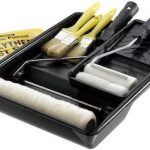
Check Price On AmazonStanley's set is the roller kit we used on the new plaster ceiling in our photos and in the Short above. It's a complete decorating kit, with a 9 inch roller frame, sleeve and tray for walls and ceilings, plus a 4 inch roller with its own frame, tray and two sleeves, one for gloss and one for emulsion.
Three paint brushes and a poly dust sheet are included too, so you can cut in and protect the furniture without buying anything else. In our Short, the 9 inch roller put emulsion on smoothly with minimal mess. The smaller tray stores inside the larger one, which keeps the kit tidy in the shed. If you already own brushes and a dust sheet, you're paying for things you don't need.
What we like
- 9 inch and 4 inch rollers in one kit
- Separate mini sleeves for gloss and emulsion
- Three brushes and a dust sheet included
- Applied emulsion smoothly with minimal mess in our test
- Small tray stores inside the large one
What to know
- You pay for brushes and a dust sheet you already own
Our verdict
One box with everything for walls, ceilings and woodwork is the Stanley set's big selling point. It makes most sense for a first home or anyone without decorating gear, since you can cut in, roll and cover the furniture without a second trip to the shop. If you already own brushes and a dust sheet, half the kit goes unused and the ProDec Tiger is better value.
Best Value
PRODEC Tiger Medium Pile Roller

Best for: Emulsion and masonry paint on smooth or lightly textured surfaces
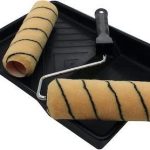
Check Price On AmazonProDec's Tiger kit gives you the essentials for walls and ceilings at a low price, with a push-fit frame, a 9 inch black plastic tray and two 9 inch woven acrylic sleeves, so you've got a spare ready when the first one is loaded with a different colour.
The medium pile holds plenty of paint and suits smooth or semi-smooth surfaces, which covers most plastered walls and ceilings and smoother masonry paint jobs. The sleeves are well made for the money. Our only complaint is the frame handle, which started coming away from the frame after a few days of painting. Keep an eye on it and you'll get a good run out of the kit.
What we like
- Two 9 inch woven acrylic sleeves
- Push-fit frame
- 9 inch tray included
- Suits emulsion and masonry paint
- Good sleeve quality for the money
What to know
- The handle started to come away from the frame after a few days of use
Our verdict
The ProDec Tiger suits anyone who needs a decent wall and ceiling roller with a spare sleeve and doesn't want to pay for extras. Just check the handle is seated firmly each time. If you need mini rollers too, the Stanley set covers both sizes, and for painting high ceilings, the Harris 430 Easy Reach adds an extending handle.
Best For Ceilings
Harris 430 Easy Reach

Best for: Ceilings and high walls in rooms with standard ceiling heights
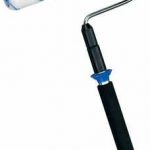
Check Price On AmazonThe Harris Easy Reach has a built-in extending handle that reaches up to 88 cm, which helps you reach a ceiling from the floor in rooms with standard heights. It's also handy at floor level, where it saves your back when painting a garage floor.
You get a 9 inch frame and a sleeve that Harris says gives a fine finish and good coverage, and the handle has an ergonomic foam grip. It's a simple, well-made roller that doesn't cost much, and its only real limit is reach. At 88 cm it's shorter than many extension poles, so for stairwells and tall ceilings you'll still need a proper pole or a telescopic ladder.
What we like
- Extends up to 88 cm
- 9 inch frame and sleeve included
- Fine finish and good coverage according to Harris
- Comfortable foam grip
- Affordable for an extending roller
What to know
- Shorter reach than most extendable rollers and poles
Our verdict
Rooms with ordinary ceiling heights are where the Harris 430 Easy Reach makes sense, since it saves dragging a stepladder from one side of the room to the other. The 88 cm reach is short for an extending roller, though, so stairwells call for a proper pole or the 2.5 metre Wagner HandiRoll.
Best Professional
Wagner HandiRoll Non Drip

Best for: Large rooms and high ceilings where refilling a tray slows you down
Check Price On AmazonThe HandiRoll works differently from every other roller here. Paint sits in a 550 ml tank at the bottom of the handle, and a power trigger pumps it into the centre of the sleeve, so you're not dipping into a tray every few strokes and there are fewer drips. Wagner says one fill covers about 5 square metres.
It extends to 2.5 metres, which is long enough for stairwells and high ceilings, and it takes a 9 inch sleeve. Wagner backs it with a 4 year guarantee. It's the most expensive roller in this roundup, and a full tank on a fully extended handle adds up to a heavy tool, so expect tired arms on a big ceiling. You'll also need to clean the pump thoroughly after every job.
What we like
- Trigger feeds paint into the sleeve from the handle
- 550 ml tank covers about 5 square metres according to Wagner
- Extends to 2.5 metres
- Fewer drips than tray rolling
- 4 year guarantee
What to know
- Most expensive roller in this roundup
- Heavy when full and fully extended
Our verdict
The Wagner HandiRoll suits anyone painting big rooms, high ceilings or a lot of walls who wants to stop going back and forth to the tray. It's a lot of money for a roller, though. For ordinary ceilings, the Harris 430 Easy Reach does the job for less, and for most DIY decorating, the Stanley set is all you need.
Best Mini
Cottam Mini Paint Roller Tray Kit

Best for: Smooth finishes on cupboards, doors and upcycled furniture
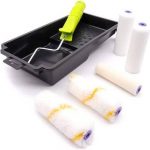
Check Price On AmazonMini rollers give a smoother finish than a brush on flat surfaces, which is why they suit painting kitchen cupboards, flush doors and furniture. Cottam's kit gives you a slimline frame, a tray and five sleeves, so you can match the sleeve to the paint.
There are two foam sleeves for gloss and satin, two polyacrylic sleeves for emulsion and a velour sleeve that's meant for the finest finish on smooth surfaces. Having spares means you can bin a sleeve after an oil-based paint instead of spending ages cleaning it. The construction quality could be better, but it's still good for the cost of the kit.
What we like
- Five sleeves in foam, polyacrylic and velour
- Foam and velour sleeves for smooth woodwork
- Slimline frame for narrow panels
- Tray included
- Spare sleeves for switching paints
What to know
- Construction quality could be better
Our verdict
The Cottam kit is right for anyone painting cupboards, doors or furniture who wants a smooth finish and a sleeve for every type of paint. It's cheap enough to treat the sleeves as disposable. If you want brushes, tape and dust sheets in the box too, the Hynec kit is more complete, and for walls you'll need a full-size roller like the Stanley.
Best Mini Runner-Up
Hynec Mini Paint Roller Kit

Best for: Upcycling and small decorating jobs where you need every accessory
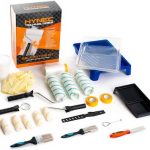
Check Price On AmazonHynec's mini roller kit goes beyond the rollers. Alongside three roller sleeves, an ergonomic frame and an anti-slip tray, you get brushes, dust sheets, masking tape, a can opener and a paint stirrer, which covers almost everything for a small upcycling or touch-up job.
The rollers give a smooth finish on furniture, doors and panelling, and the anti-slip tray stays put on a worktop or table. The extras are where the money goes. It costs more than the Cottam kit, and if you already have brushes and tape, you'll be paying twice for them. For someone starting out with no decorating kit, it's a convenient way to get the lot in one order.
What we like
- Three roller sleeves with an ergonomic frame
- Anti-slip tray
- Brushes, tape and dust sheets included
- Can opener and paint stirrer in the box
- Smooth finish on furniture and doors
What to know
- Costs more than the Cottam mini kit
- Fewer roller sleeves than the Cottam
Our verdict
The Hynec kit suits beginners and upcyclers who want one box with everything for a small project. The accessories save a separate shopping trip. If you only need the rollers, the Cottam kit gives you more sleeves for less, and if walls and ceilings are part of the job, the Stanley set includes a full-size roller too.
Picking The Right Roller And Sleeve
The frame matters less than the sleeve. Get the sleeve right for the surface and paint, and even a cheap frame gives a good finish.
Roller Width For The Job
A 9 inch roller is the standard size for walls and ceilings. It covers ground quickly while staying light enough to control. A 12 inch roller suits big open walls but is heavy once loaded. A 4 inch mini roller is for doors, cupboards, skirting and furniture, where a full-size roller won't fit.
Matching The Pile To The Surface
Pile is the length of the fibres on the sleeve. A short pile gives the smoothest finish and suits flat plaster and smooth woodwork. A medium pile, like the ProDec Tiger, holds more paint and is the all-rounder for most walls and ceilings. A long pile pushes paint into rough surfaces such as pebbledash, render, brick and breeze blocks.
Using a short pile on a rough wall leaves bare spots in the hollows, while a long pile on smooth plaster leaves a heavy orange-peel texture.
Sleeve Material And Your Paint
Woven acrylic and polyester sleeves suit water-based emulsion and masonry paint. Foam sleeves give a very smooth finish with gloss and satinwood on flat woodwork, but they can leave air bubbles in emulsion. Mohair and velour sleeves are a good match for solvent-based paints and fine finishes.
Rinse a new sleeve and spin it dry before use, or wrap it in masking tape and peel it off, to remove loose fibres that would otherwise end up on the wall.
Extension Poles And Reach
An extension pole is the cheapest way to make ceilings easier. Most standard frames have a threaded handle that takes a pole, which lets you roll a ceiling from the floor and paint high walls without moving a ladder every few minutes. Built-in extending handles like the Harris are neat but shorter. Check the frame has a threaded handle before you buy.
Trays, Scuttles And Cleaning Up
A tray is fine for most rooms. A deeper scuttle holds more paint and is less likely to spill on a big job. Line trays with a tray liner or a carrier bag to save on washing up.
Wash emulsion out of sleeves in warm water until it runs clear. Between coats, wrap the loaded roller in a bag to stop it drying out. Keeping a few spare sleeves means you can switch paints without stopping to clean, and if anything drips, our guide on getting paint out of carpet can help.
Paint Roller Questions From Our Readers
What roller is best for painting walls with emulsion?
A 9 inch roller with a medium pile sleeve in woven acrylic or polyester is the best choice for painting walls with emulsion. It holds plenty of paint, covers quickly and leaves a light, even texture on plastered walls. Use a short pile for very smooth walls where you want a flatter finish, and a long pile for textured or rough surfaces.
How do you avoid roller marks when painting?
Avoid roller marks by keeping a wet edge, which means rolling into the paint you've just applied before it starts to dry. Load the roller evenly, don't press hard, and finish each section with light strokes in one direction. Roller marks also come from overworking paint that's already drying, so work in sections and move on rather than going back over tacky areas.
Can you use a roller for gloss paint?
You can use a roller for gloss paint on flat surfaces such as doors, cupboard fronts and panels. A small foam or velour mini roller gives the smoothest finish. Roll the gloss on, then lay it off with a light brush stroke to remove any tiny bubbles. Mouldings, edges and narrow trims are still best painted with a good brush.
Should you wet a paint roller before using it?
Dampen a roller sleeve before using water-based emulsion, then spin or squeeze out the excess so it's barely moist. This helps the sleeve load paint evenly and removes loose fibres. Don't wet a sleeve for oil-based paint, as water will stop it loading properly. For solvent-based paints, start with a dry sleeve and load it gradually in the tray.
Is the Stanley roller set worth buying if I already own brushes?
Not really, because you'd be paying for three brushes and a dust sheet you don't need. The Stanley Decorating Paint Roller Set makes most sense for a first home or anyone without decorating gear, since the 9 inch and 4 inch rollers, trays and sleeves come in one box. If you only want a wall roller, the ProDec Tiger is better value.
Is the Wagner HandiRoll worth the money for an ordinary room?
No, the Wagner HandiRoll is a lot of money for a standard room. It's the most expensive roller in our roundup and heavy when full and fully extended. It earns its keep on big rooms, stairwells and high ceilings, where the trigger-fed 550 ml tank and 2.5 metre reach save trips to the tray. For ordinary ceilings, the Harris 430 Easy Reach does the job for less.
Which mini roller kit would you pick for kitchen cupboards, the Cottam or the Hynec?
The Cottam kit is the better fit for cupboards, because it gives you five sleeves, including a velour one for the finest finish on smooth surfaces, plus foam sleeves for gloss and satin. The build quality could be better, but it's cheap enough to treat the sleeves as disposable. The Hynec kit costs more and suits small upcycling jobs where you want brushes and dust sheets in the box.
Is the ProDec Tiger roller well made?
The ProDec Tiger is a sound budget roller with a push-fit frame, a 9 inch tray and two woven acrylic sleeves, but the handle started to come away from the frame after a few days of use on ours. Check the handle is seated firmly each time you pick it up. The spare sleeve is the real bonus, as it lets you switch colours without washing out.
The Paint Roller We'd Buy First
The Stanley Decorating Paint Roller Set is the roller kit we'd recommend for most homes. It handled our new plaster ceilings and walls well, and the mini roller covers woodwork in the same box. If you only need a wall roller, the ProDec Tiger is the value choice.
For smooth finishes on cupboards and furniture, add a Cottam mini roller kit to whichever full-size roller you choose.

Eddie spent five years as a self-employed painter and decorator before going part time to become one of the main writers at DIY Works. From garden fences to mist coats on fresh plaster, painting and decorating is his speciality.