The Best Wood Filler For Holes And Imperfections Of Any Size
Ready-mixed and two-part fillers that patch dents and chips in doors before you paint.

Our quick verdict
Our pick of the best wood filler is the Everbuild Multi-Purpose, because it handles everyday dents, nail holes and chips in skirting and frames, and its spread of shades makes colour matching on bare timber easier. For missing corners and rotten patches, go for the Roxil 2 Part Wood Filler, a two-part filler you can build up in layers and shape.
DIY Works is reader supported. If you buy through our links we may earn a commission, which never changes what we recommend. How we make money.
Our Picks At A Glance
- Check price of Everbuild Multi-Purpose
- Check price of Ronseal High Performance Wood Filler
Best For Tough Repairs
Ronseal High Performance Wood FillerChipped doors, rotten patches and repairs that take a lot of knocks
- Check price of Roxil 2 Part Wood Filler
- Check price of Ronseal Multi-Purpose
Best All-Rounder
Ronseal Multi-PurposeSmall general repairs where you'll screw or nail into the filler
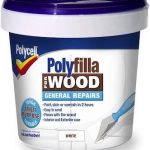
- Check price of Polycell Polyfilla For Wood
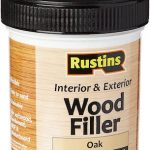
- Check price of Rustins Oak Wood Filler
Best For Oak
Rustins Oak Wood FillerFilling oak and other bare timber that's getting a stain or varnish
Nail holes and a missing corner of a window sill need very different fillers. Ready-mixed tubs are quick for shallow dents but have a depth limit, so deep or rotten repairs either go in layers or call for a two-part filler that sets hard enough to shape. The finish going on top matters next. Under paint any colour will do, but bare timber under stain or varnish needs a shade close to the wood, because filler won't take stain the way timber does.
Our picks include both types, with wood tones as well as white.
How We Tested These Wood Fillers
Over the years we've carried out plenty of repairs on wooden surfaces as well as several upcycling projects, and we've used a number of wood fillers along the way to get the finish we wanted.
The photos below show one of those repairs. An oak door had been dropped and chipped in several places along one edge, and we used Ronseal High Performance Wood Filler to repair it. The first photo shows the damage and the second shows the same edge after filling, where most of the chips are hard to spot unless you know where to look.


Every filler on the list was judged against the same things:
- Filling depth: how deep a hole it fills in one go and whether it can be layered
- Drying time: how soon it can be sanded, set against the brand's figure
- Application: how easily it spreads and presses into a hole
- Finish: how smoothly it sands and how well it takes paint, stain or varnish
- Surfaces: which timbers and boards it's made for, indoors or out
- Tub size and value: how far the tub goes before you need another
The Best Wood Fillers We Recommend
Each filler below sands down once dry and takes a paint or wood finish over the top. We've flagged the ones that behaved differently from the label on our own repairs.
Best Overall
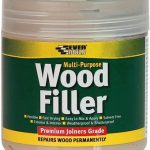
Everbuild Multi-Purpose

Best for: Everyday repairs in bare or painted wood indoors and out
Check Price On AmazonEverbuild's Multi-Purpose is a ready-mixed filler that's straight out of the tub and onto the job, and it works on all types of wood inside and outside the house. The range of shades is the big draw, with light stain, medium stain, pine, white, light oak, dark oak, mahogany and teak, so there's a good chance of a close match on bare timber.
It's non-flammable with very little odour, which makes it pleasant to use indoors, and Everbuild says it sands smoothly to a waterproof surface. The brand quotes fills up to 5mm deep and drying within 60 minutes, but on our own repairs it took a good deal longer to dry than the other fillers we've used, so don't plan to sand it the moment the hour is up.
For bigger or tougher repairs, Everbuild also sells a two-part high performance version.
What we like
- Wide choice of wood shades plus white
- Ready-mixed and easy to apply
- Waterproof once dry
- Non-flammable with minimal odour
- Sands to a smooth surface
- Fills up to 5mm deep according to Everbuild
What to know
- Took much longer to dry on our repairs than the other fillers we've used
- Shallow holes only unless you build it up in layers
Our verdict
Dents, nail holes and small chips in skirting, frames and furniture are the everyday jobs Everbuild handles best, and the spread of shades makes colour matching on bare timber easier. Just give it longer to dry than the label suggests. Deeper holes are better tackled with Polycell Polyfilla For Wood, which fills to 10mm.
Best For Tough Repairs
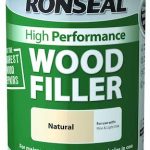
Ronseal High Performance Wood Filler

Best for: Chipped doors, rotten patches and repairs that take a lot of knocks
Check Price On AmazonThis is the filler we have the most experience with, and the battered tin in the featured photo at the top of the page shows it. It's the one we used on the dropped oak door in our testing section, where it brought back a badly chipped edge to the point that the damage is hard to see.
Ronseal High Performance is a professional-grade filler sold in a large 1kg tin, in natural, dark and white. Ronseal says it gives extremely tough repairs that won't shrink or crack on any type of wood, and that it's ready in 30 minutes. It works indoors and out, and deeper holes beyond 5mm can be filled in layers.
It's the most expensive filler in this roundup, though you do get a large tin for the money.
What we like
- Repaired our chipped oak door so the damage is hard to spot
- Natural, dark and white shades
- Dries in 30 minutes according to Ronseal
- Suitable for interior and exterior use
- Fills deeper than 5mm when built up in layers
- Large 1kg tin
What to know
- Most expensive filler in our roundup
- Fewer shades than Everbuild Multi-Purpose
Our verdict
This is the filler we trust most for repairs that need to be tough, from a chipped door edge to a damaged sill or exterior timber. Our dropped oak door is the proof. It costs the most here, so for quick touch-ups where colour choice matters more than strength, Everbuild Multi-Purpose makes more sense.
Best 2 Part
Roxil 2 Part Wood Filler

Best for: Larger defects that need building up and shaping
Check Price On AmazonRoxil's filler is a two-part formula, so you mix the filler with a hardener before it goes on. That extra step pays off in a tougher repair you can mould into shape, and Roxil says it grips and sands well and is easy to use even if it's your first time with a wood filler.
Once mixed it cures fast, with Roxil estimating around 30 minutes. It's styrene-free, works indoors or out and can be layered to rebuild bigger defects, which is handy on a rotten window frame or a broken corner. Each tub gives 220 cm³ of filler and comes with an applicator.
Mix small batches. Two-part filler starts setting as soon as the hardener goes in, so only mix what you can use in a few minutes.
What we like
- Simple to mix together
- Styrene-free formula
- Suitable for interior or exterior use
- 220 cm³ of filler per tub
- Layers up to rebuild larger defects
- Applicator supplied
What to know
- Has to be mixed before use, unlike ready-mixed fillers
- Relatively expensive compared with other fillers
Our verdict
Missing corners and rotten patches need rebuilding rather than filling, and that's where a two-part filler like Roxil earns the extra effort. The applicator and fast cure help. For a quick dent or nail hole, mixing a hardener is more fuss than the job deserves, and a ready-mixed tub is the easier choice.
Best All-Rounder
Ronseal Multi-Purpose

Best for: Small general repairs where you'll screw or nail into the filler
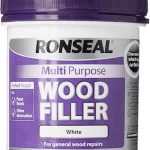
Check Price On AmazonRonseal's Multi-Purpose filler costs far less than its High Performance sibling and handles general wood repairs well. It's ready-mixed, suitable for indoor and outdoor jobs and, according to Ronseal, dries in two hours and won't shrink or crack.
Once it's hard, it can be sanded, stained, screwed and nailed, so you can refit a hinge or a fixing into a repaired hole. Bigger holes can be filled in layers. It comes in white, dark, medium and oak shades.
The catch is the tub. It's only sold in a small 250g size, and during our testing we got through one after just a few repairs. Buy two if you've got more than a couple of jobs lined up.
What we like
- Takes screws and nails once dry
- Suitable for indoor or outdoor repairs
- Can be sanded and stained
- White, dark, medium and oak shades
- Layers up to fill large holes
- Won't shrink or crack according to Ronseal
What to know
- Small 250g tub that we used up after a few repairs
- Two hours to dry against Ronseal's 30 minutes for High Performance
Our verdict
Being able to screw back into a filled hole makes Ronseal Multi-Purpose handy for refitting hinges and fixings. The small 250g tub is its weakness, as we found when it ran out after a few repairs. Anything bigger than a handful of jobs calls for the 1kg tin of Ronseal High Performance.
Best For Large Holes
Polycell Polyfilla For Wood

Best for: Deeper holes and light scratches in a single job
Check Price On AmazonPolycell is best known for its wall fillers for cracks and holes, and its wood version brings the same easy handling to timber. It comes in a 380g tub, and Polycell says it fills up to 10mm deep in all types of wood, which is the deepest single fill quoted by any filler here.
Polycell says it dries within two hours, then it sands down easily and can be nailed or screwed. It flexes with the wood, which helps on timber that moves with the seasons, and it leaves a water-resistant finish for interior or exterior use. It suits deep repairs and light scratches alike.
Don't buy it to keep. After testing, our opened tub had started to go off within a couple of weeks, so get it for a specific job rather than leaving it on the shelf.
What we like
- Fills up to 10mm deep according to Polycell
- Easy to sand once dry
- Flexes with the wood
- Suitable for interior or exterior use
- Takes nails and screws
- Water-resistant finish
What to know
- Our opened tub started to go off within a couple of weeks
Our verdict
Polycell is the one to grab when you want a deep hole filled in a single go, thanks to its 10mm fill, and it copes with shallow scratches too. The short life of an opened tub is the thing to plan around, so buy it for a specific job and use it up. For rebuilding missing sections, Roxil is the stronger option.
Best For Oak
Rustins Oak Wood Filler

Best for: Filling oak and other bare timber that's getting a stain or varnish
Check Price On AmazonRustins makes its wood filler in several shades to match the finish you're after, including oak, natural, mahogany, teak and white. The oak version is the one we'd pick for oak doors, furniture and floors, where a filler in the wrong tone stands out once the varnish goes on.
It isn't only for oak, either. Rustins says it can be used on softwood, hardwood, MDF and even plasterboard, so one tub covers most repairs around a room. It flexes with the wood, sands easily and takes paint, stain or varnish.
Drying is slower than some of the others here, with Rustins quoting up to two hours, so leave it alone until it's fully hard before sanding.
What we like
- Takes paint, stain or varnish
- Flexes with the wood
- Easy to sand
- Works on softwood, hardwood, MDF and plasterboard
- Oak, natural, mahogany, teak and white shades
What to know
- Can take up to 2 hours to dry
Our verdict
Pick Rustins Oak when the repair has to disappear under a clear or stained finish on oak doors, furniture or floors, where a filler in the wrong tone shows straight away. It also works on MDF and plasterboard. On painted woodwork the colour doesn't count, so any of the other fillers will do the job just as well.
How To Choose A Wood Filler For The Job
The best wood filler depends on the size of the hole, where the wood is and what finish is going on top. Run through the following before you open a tub.
Ready-Mixed Or Two-Part Filler
Ready-mixed fillers such as Everbuild, Ronseal Multi-Purpose, Polycell and Rustins are the simplest to use. You scoop out what you need, press it into the hole and leave it to dry. They're right for nail holes, dents, small chips and open joints.
Two-part fillers such as Roxil, and the two-part version from Everbuild, are mixed with a hardener. They set harder and faster and can be built up and shaped, which makes them better for rotten patches in window frames and sills, broken corners and anything that takes a lot of wear. The trade-off is a short working time once mixed. If you're replacing rather than repairing a sill, our guide on how to replace a window sill walks through the fit.
Filling Depth
Every filler has a limit to how deep it fills in one go. Everbuild quotes up to 5mm and Polycell up to 10mm. Pushing a thick plug of filler into a deep hole risks it slumping or cracking as it dries, so fill deep holes in layers and let each one harden before adding the next. Ronseal High Performance, Ronseal Multi-Purpose and Roxil are all made to be layered.
Matching The Colour Or Painting Over
On woodwork that's going to be painted, the filler colour makes no difference, so white or natural is fine. Seal any knots on bare softwood before priming, and our pick of the best knotting solutions covers the products that stop resin bleeding through. Then finish with a hard-wearing paint such as one from our best satinwood paints roundup.
Bare timber under varnish, oil or stain is a different story. Filler doesn't absorb stain in the same way as wood, so pick the closest shade you can find. Rustins and Everbuild both offer a range of wood tones, and testing on an offcut first shows how the colour looks once the finish is on.
Indoor And Outdoor Repairs
Five of the six fillers here are rated for exterior use, but outdoor repairs need more care. Cut back any soft or rotten wood to sound timber, let it dry out thoroughly and choose a filler that flexes with the wood, such as Polycell or Rustins, or a tough option like Ronseal High Performance. Then protect the repair with a proper exterior coating, and our guide to the best exterior wood paints covers doors, frames and cladding.
Tub Size And Shelf Life
A 250g tub suits a few touch-ups, while a 1kg tin makes more sense for a whole house of skirting and frames. Once opened, ready-mixed filler dries out in the tub over time, and our opened Polycell started going off within a couple of weeks. Press the lid down firmly after each use and buy the size that matches the job.
Wood Filler Questions We Get Asked
Can you use wall filler on wood?
Wall filler can be used for tiny holes in painted wood indoors, but a proper wood filler is the better choice. Wood fillers flex with the timber as it expands and contracts, take screws and nails, and are made to accept stain and varnish. Standard wall filler is more brittle, so it cracks or drops out of wood that moves.
How long does wood filler take to dry?
Wood filler takes anywhere from about 30 minutes to two hours to dry, depending on the product, the depth of the fill and the temperature. Ronseal High Performance and Roxil quote around 30 minutes, while Ronseal Multi-Purpose, Polycell and Rustins quote up to two hours. Deep fills and cold rooms take longer, and Everbuild Multi-Purpose took longer than its label on our repairs.
Can you paint over wood filler?
Yes, you can paint over wood filler once it's fully dry and sanded flush with the surrounding wood. Wipe off the dust, then spot prime the filled areas so the paint doesn't sink in and leave a dull patch. On bare timber, prime the whole piece after filling, then apply your undercoat and top coat as normal.
Can wood filler be stained or varnished?
Most wood fillers can be stained or varnished, but the filler won't take stain in exactly the same way as the surrounding wood. Choose a filler that already matches the timber, such as Rustins Oak Wood Filler for oak, and test the finish on an offcut first. Ronseal Multi-Purpose and Rustins both say their fillers accept stain.
Which wood filler would you buy to repair a chipped door?
Ronseal High Performance Wood Filler, and we've done exactly that job with it. A dropped oak door of ours had chipped in several places along one edge, and after filling, the damage is hard to spot unless you know where to look. It's the dearest filler in this roundup, though the 1kg tin in natural, dark or white gives you plenty of filler for the money.
Is the Ronseal Multi-Purpose filler enough for a few small jobs?
Yes, Ronseal Multi-Purpose suits small general repairs, and once hard it takes screws and nails, so you can refit a hinge into a repaired hole. The tub is only 250g, and we used one up after just a few repairs. Buy two if you have more than a couple of jobs, or choose the 1kg Ronseal High Performance tin.
Why would I choose the Roxil two-part filler over a ready-mixed tub?
Choose Roxil for missing corners and rotten patches that need rebuilding, because the hardener gives a tougher repair that cures in around 30 minutes according to Roxil. It layers up to rebuild larger defects and comes with an applicator. Mix small batches, since it starts setting as soon as the hardener goes in. For a nail hole, a ready-mixed tub is easier.
Can I keep an opened tub of Polycell Polyfilla For Wood for later jobs?
We wouldn't count on it. Our opened tub of Polycell started to go off within a couple of weeks, and any ready-mixed filler dries out in the tub once air gets in, so press the lid down firmly after each use. It's still the one we'd pick for deep holes, as Polycell quotes a 10mm single fill, the deepest here.
Which Wood Filler We'd Reach For First
Everbuild Multi-Purpose is our best wood filler for everyday repairs, with a wide choice of wood shades and white for painted work, though it needs longer to dry than its label says. Ronseal High Performance is the filler we'd use on anything that takes a lot of knocks, and it's what brought our chipped oak door back.
For rebuilding larger sections, Roxil's two-part filler is the stronger choice, and Polycell suits deeper holes you want to fill in one go. Once the repair is sanded, our guide to painting skirting boards covers getting a clean finish over the top.

Dave, or Demolition Dave as the team calls him, worked as a builder for over 10 years before joining DIY Works. He now concentrates on his own properties and writes most of our construction content, along with tools, carpentry and plenty more.