How Fast Does Bamboo Grow In The UK?
Six weeks of photos and a two-year update from the bamboo screen along our own back fence.

The short answer
Bamboo grows fast in the UK, with running varieties putting on roughly 80 to 140 cm a year and clumping varieties around 30 to 60 cm, depending on the species, planting and care. New canes grow much faster than that in spring. The Phyllostachys aurea in our garden sent canes from about 20 cm to around 250 cm tall in six weeks.
Bamboo is one of the quickest ways to add height and privacy to a garden border, and plenty of varieties cope well with the UK climate. We planted a row along the back fence of our own garden to screen it, then photographed it every week to see just how fast it would shoot up.
The planting itself is covered step by step in our guide on how to plant bamboo with a root barrier, and it's the same bamboo you'll see in the growth photos below.
Clumping And Running Bamboo
Clumping bamboo grows in a tight cluster that widens slowly, so it stays roughly where you put it. Running bamboo spreads through underground stems called rhizomes, sending up new canes some distance from the parent plant. Runners grow faster and fill a screen sooner, but they must be planted inside a root barrier or they'll push into lawns, beds and neighbouring gardens.
Ours is Phyllostachys aurea, a running bamboo, which is why it went in behind a barrier.
How Fast Does Bamboo Grow In The UK?
As a rough guide, running bamboo grows somewhere between 80 and 140 cm a year in the UK, while clumping bamboo puts on around 30 to 60 cm a year. Where yours lands in that range depends on the species, how well it was planted, and the sun, water and shelter it gets.
Those yearly figures hide how bamboo actually grows. Each new cane, or culm, pushes up from the ground in spring and reaches its full height within a few weeks, then stops getting taller. The plant as a whole gains height because each year's new canes come up taller and thicker than the last. So you'll see a burst of fast growth in spring and early summer, then very little until the next round of shoots.
Our Bamboo Growth Case Study
Once the bamboo was in, we took a photo of the same spot every week for six weeks. We'd estimate the fastest new canes went from about 20 cm to around 250 cm in that time, which is far more than the yearly averages above. That's the spring growth spurt in action, and it slows down once the new canes reach their full height.
The first two weeks show fresh purple shoots breaking through the mulch at the base of the plants.
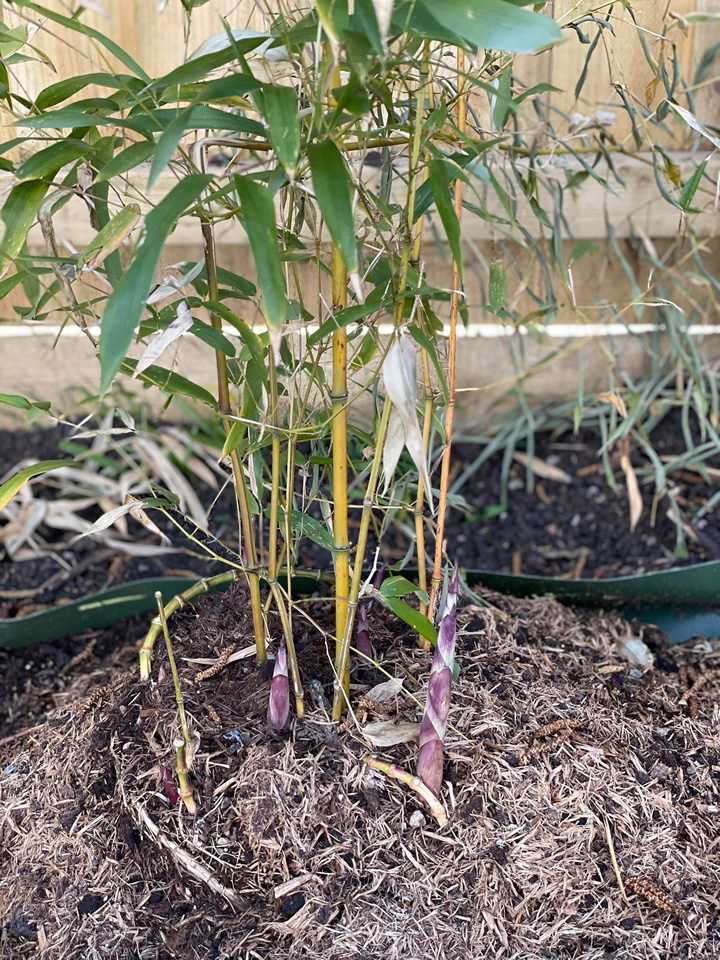
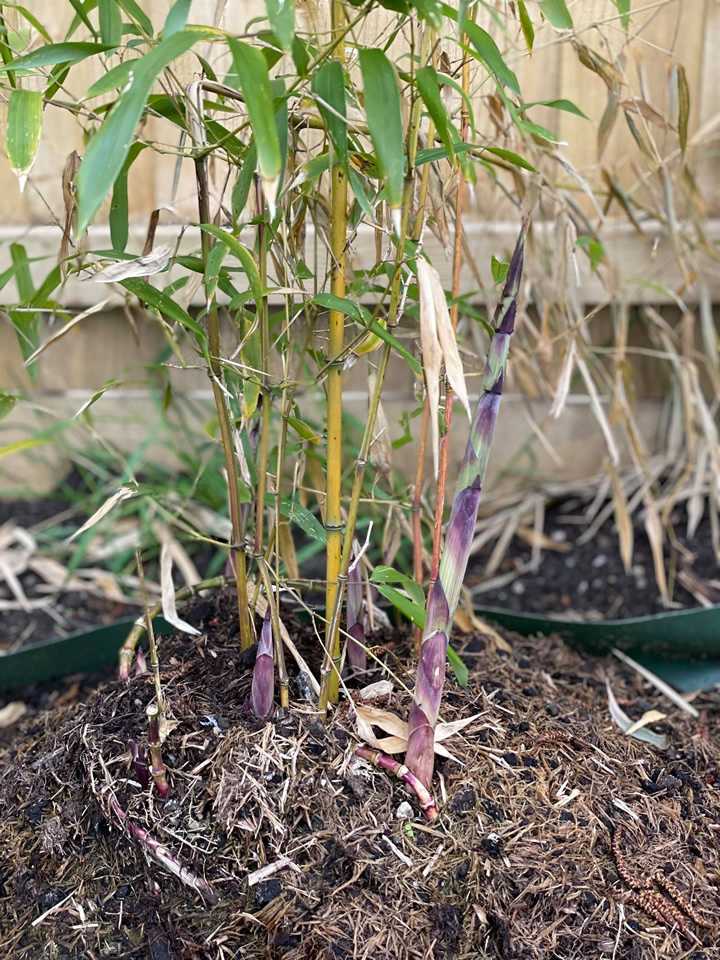
By weeks three and four the new canes had pushed past the older growth and were reaching up the fence panels.
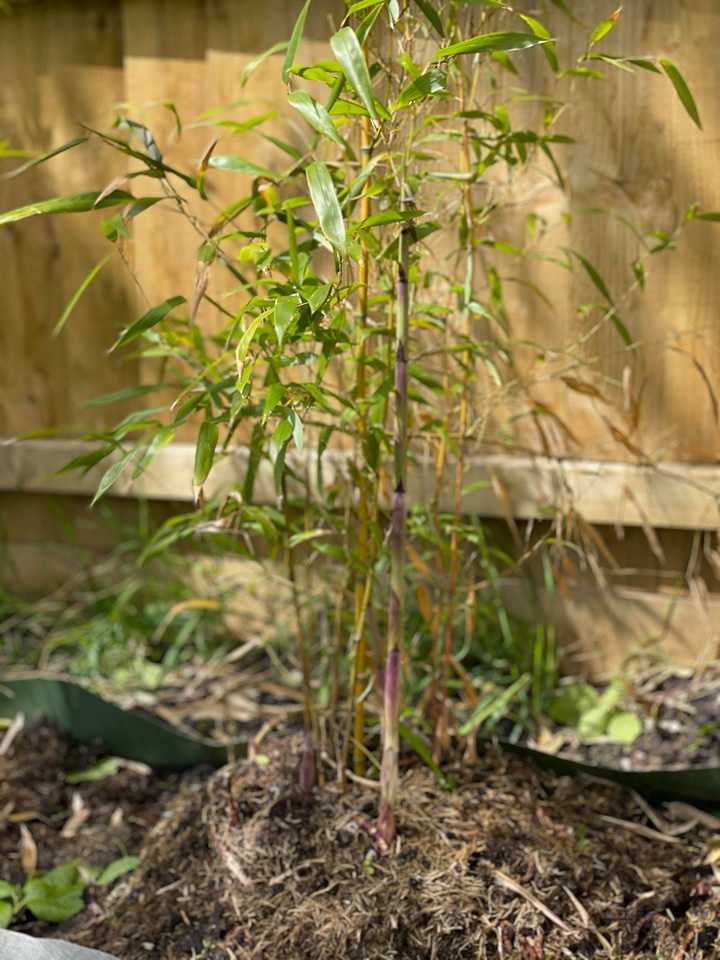
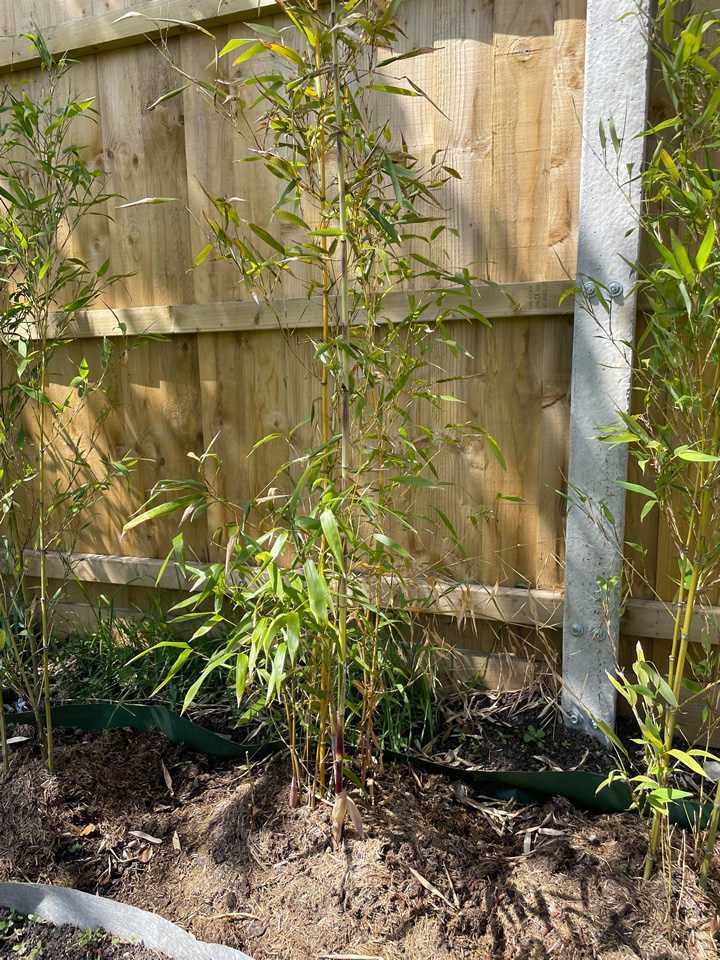
Weeks five and six show the biggest jump, with the leading canes clearing the top of the fence.


Two Years On
We went back to the same spot two years later. The bamboo has grown taller again and filled out into a dense, leafy screen that completely hides the fence behind it.

What Our Photos Show About Bamboo Growth
It wasn't a single freak cane that grew this quickly. Several of the 12 potted plants we put in sent up canes at a similar pace. The jump between week four and week five was the most dramatic, during a spell that mixed rain with sunshine, which is exactly what bamboo wants in spring.
The first season gives you height, and the next couple of years give you density. By the two-year mark ours had become a proper privacy screen rather than a row of individual plants.
Helping Newly Planted Bamboo Grow Faster
Newly planted bamboo needs a little help through its first year to put on growth like ours, and four jobs make most of the difference:
- Water deeply: Give it a good soak rather than a sprinkle, especially through the first summer, so moisture reaches the roots. Avoid keeping the ground waterlogged, which can rot them.
- Feed in spring: A balanced slow-release fertiliser in spring or early summer gives the new shoots a boost, though it isn't essential on good soil.
- Mulch the base: A layer of organic mulch locks moisture in and smothers weeds. As it breaks down it feeds the soil too, and it keeps the roots from swinging between hot and cold.
- Thin out old canes: Cut out dead and weak canes in early spring before the new shoots appear, so the healthy ones get more light and energy.
Keeping A Fast-Growing Bamboo Screen In Check
Planted properly, bamboo is one of the best plants for quick screening, and watching it shoot up week by week is hugely satisfying. The one problem we come across is running bamboo planted without a root barrier, which spreads through gardens and becomes a real nuisance. If you're planting a runner for the first time, read up on the barrier before you dig. Once it's in, walk along the barrier line each summer and cut off any rhizome that tries to creep over the top edge.
Our plan is a solid, level screen along the back of the garden. Once it reaches the height we want, we'll keep the top tidy with one of the best long reach hedge trimmers, and the clippings can go through a garden shredder for green waste to save trips to the tip.
Quick Questions And Answers
What is the fastest growing bamboo in the UK?
Running bamboos such as Phyllostachys grow the fastest in the UK, putting on more height each year than clumping types like Fargesia. That speed comes from their spreading rhizomes, which is also why they need a root barrier. If you want quick screening without the risk of spreading, a vigorous clumping variety is the safer choice.
How tall does bamboo grow in the UK?
Bamboo height in the UK depends on the variety, ranging from compact types for pots to running bamboos that grow well above a standard fence. Our Phyllostachys aurea sent canes past the top of a garden fence in its first six weeks. Check the label for the expected mature height before planting, and pick one that suits the space.
How long does bamboo take to form a privacy screen?
Bamboo takes around two years to form a dense privacy screen when planted in a row with plants spaced fairly close together. The first season brings height as new canes shoot up, and the following years fill in the gaps with more canes and foliage. Our own bamboo screen fully hid the fence behind it after two years.
Does bamboo grow in winter?
Bamboo puts on very little growth in a UK winter. Evergreen varieties keep their leaves, but new canes only appear once the soil warms up in spring. Most of the year's height arrives in a burst during spring and early summer, so winter is a good time to plan thinning and tidying before the new shoots come through.
How many bamboo plants did you put in along the fence?
Twelve potted Phyllostachys aurea went in along our back fence, all behind a root barrier as it's a running bamboo. That number matters for the growth figures, because the fast canes weren't a one-off. Several plants in the row kept pace with each other through the six weeks of photos.
Which week did your bamboo grow fastest?
Between weeks four and five. That week brought a mix of rain and sunshine, the spring weather bamboo loves, and the tallest cane shot past the top of the fence panel. Over the full six weeks we'd estimate the fastest canes went from about 20 cm to around 250 cm.
Does bamboo need feeding to grow this fast?
Not on good soil. Feeding helps, and a balanced slow-release fertiliser in spring or early summer gives new shoots a lift, but water makes the bigger difference in the first year. Give it a deep soak rather than a sprinkle through the first summer, without leaving the ground waterlogged, and keep a layer of mulch around the base.
What goes wrong with running bamboo?
Nearly every problem we see comes from leaving out the root barrier. Without one, running bamboo sends rhizomes under the lawn, into borders and through to next door, and digging them out later is far harder than fitting a barrier at the start. That's why ours went in behind one.

Archie is our gardening specialist. He started out as an apprentice at a gardening firm, built up his own knowledge from there and now writes most of our garden content.