How To Fit A Shower Screen
A level wall channel and careful drilling are the two things that make a bath screen go up properly.

The short answer
To fit a shower screen, mark the wall channel upright with a spirit level, drill and plug the fixing holes, run sealant down the back of the channel and screw it to the wall. Hang the screen in the channel, drill through the channel into the screen frame, fit the screws and covers, push on the bottom seal and seal both sides of the channel.
Swapping a tired shower curtain or a leaking old screen for new glass changes the look of a bathroom or en suite for very little outlay. Most of the job is straightforward, and the parts that need more thought, mainly the drilling, are manageable for a beginner who takes their time.
We photographed every stage while fitting a new bath screen, so you can see exactly what each step looks like before you start your own. The featured photo shows the finished screen.
Bath Screens And Enclosure Screens
The screen in this guide is a bath screen, which fixes to the wall at one end and stands on the bath edge. A screen that's part of a shower enclosure on a tray goes up in a different order, with doors and side panels to align, but the wall channel, drilling and sealing are much the same.
Read through our steps to get a feel for the job before you commit to doing it yourself. If you haven't bought the screen yet, our roundup of the best shower screens covers fixed, hinged and folding designs.
Tools And Fixings You'll Need
- The new shower screen
- A spirit level
- A drill with masonry bits, and tile bits if you're drilling through tiles
- A screwdriver
- The supplied screws, wall plugs and screw covers
- Bathroom sealant and a sealant gun
- A pencil and masking tape
Taking Out An Old Shower Screen
Old screens come out in roughly the reverse order they went in. Lift or slide the screen out of its wall channel first, which exposes the screws holding the channel to the wall, then unscrew the channel and pull it away.
Old sealant will be left behind on the wall and bath edge, and it all needs to come off so the new bead can bond. Our guide to removing old bathroom sealant shows the quickest way to cut it out. Any black spots underneath are mould, which a decent mould remover spray clears before you go any further. Finish with a clean and let the area dry fully, because dirt or damp under the new sealant stops it sticking.
How To Fit A Shower Screen
1. Position The Wall Channel
Hold the metal wall channel against the wall at the highest point of the bath edge and use a spirit level to get it perfectly upright. Mark the fixing holes through the channel with a pencil, then take the channel away ready for drilling.

2. Drill The Fixing Holes
Drill the marked holes with a masonry bit and push a wall plug into each one. The screen's instructions give the bit size, and for this screen we used a 6mm masonry drill bit.
The wall in this bathroom is covered in wall panels, so we drilled through the panel into the wall behind. On tiles, stick masking tape over the mark so the bit doesn't skate, use a tile bit with the hammer action off and switch to a masonry bit once you're through the glaze.

3. Run Sealant Down The Wall Channel
A bead of sealant behind the channel stops water tracking down the wall behind it. You can run it down the wall or along the back of the channel itself. We ran it along the channel, as the photo shows, and used a good quality bathroom sealant so the seal lasts.

4. Screw The Wall Channel In Place
Press the channel back onto the wall, line it up with the plugged holes and drive in the fixing screws. Check it's still upright with the spirit level before the last screw goes in tight.


5. Hang The Screen In The Channel
Lower the screen into the wall channel and adjust it so it sits level with the bath. Leave a small gap between the bottom of the glass and the bath edge, as that's where the seal strip goes in step 8.

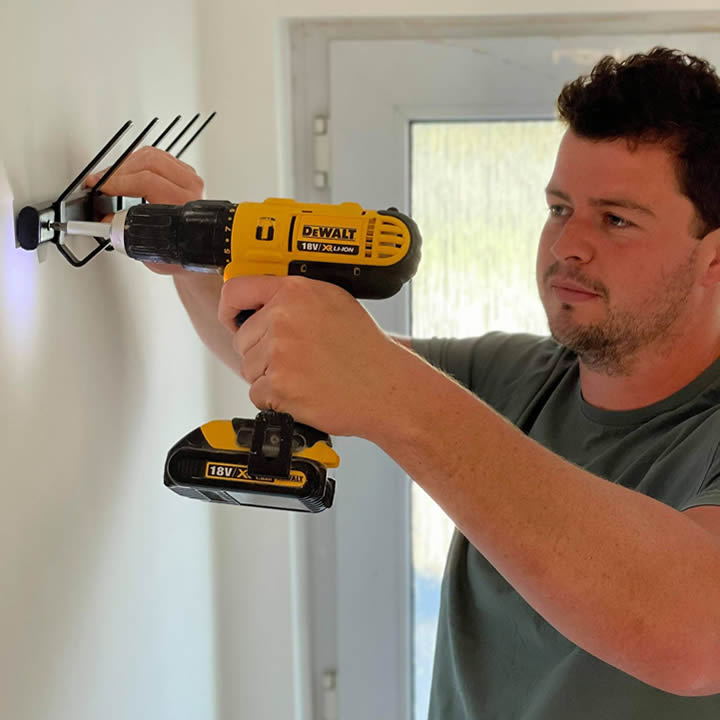
6. Drill Through The Channel Into The Frame
This is the fiddliest stage, and a second pair of hands to hold the screen steady makes it much easier. Using the bit size from the instructions, drill through the side of the channel into the screen's frame at each fixing point, then drive in the supplied screws.


7. Fit The Screw Covers
The screws are hidden with the covers that come in the box. They push on by hand and give the channel a neat finish.


8. Push On The Bottom Seal
Slide the seal strip onto the bottom edge of the glass and check it touches the bath along its whole length, with no gaps for water to escape through.

9. Seal Both Sides Of The Channel
Run sealant down both sides of the wall channel and smooth it with a wet finger or a sealant tool. Sealing only the inside edge will keep most water out, but we seal both sides so nothing can creep behind the channel from the outside either.
Leave the sealant at least 24 hours to cure before anyone uses the bath or shower.
10. Clean The Glass
Fitting a screen leaves fingerprints all over the glass. Give it a wipe once the sealant has cured, and our guide to cleaning shower glass covers the best ways to keep it clear afterwards.
The Hardest Part Of Fitting A Shower Screen
Drilling is the stage that worries most people, and it's the one to take slowly. Luckily the wall channel covers the holes, so a slightly misplaced hole stays hidden as long as the channel itself is upright.
Mark carefully, check the level twice and drill at a steady speed. If the fixing hole lands near a pipe or cable route, such as directly in line with the shower valve or an electric shower's supply, stop and check with a detector before drilling.
Keeping The New Screen Watertight
Leaks around a bath screen come from two places, the seal strip losing contact with the bath or the sealant on the channel splitting. Check both every few months, and replace the seal strip if it hardens or splits. The sealant work is the same as running a bead around the bath itself, and our guide on how to seal a bath shows that technique step by step.
More Questions Answered
Is it hard to fit a shower screen yourself?
Fitting a shower screen is a manageable DIY job for a beginner with a drill and a spirit level. The trickiest part is drilling the wall and channel accurately, and the wall channel hides small mistakes. Having a second person to hold the glass while you drill and screw the frame makes the job safer and much easier.
Should you seal the inside or outside of a shower screen?
Seal both sides of the wall channel on a shower screen. The inside seal stops shower water getting behind the channel, and the outside seal blocks splashes and water that runs round the edge. Never seal along the bottom of the glass, as the seal strip there needs to sit freely on the bath, especially on a hinged screen.
How long after fitting a shower screen can you use the shower?
Leave the sealant at least 24 hours to cure before using the shower or bath after fitting a screen. Water on fresh sealant can wash it out of the joint or stop it bonding properly, which leads to leaks. Check the sealant tube as well, as some products give a longer curing time before they're fully waterproof.
Can you fit a shower screen to tiles or wall panels?
Yes, a shower screen fits to tiles or wall panels as long as the screws go through into solid wall behind. On tiles, use masking tape and a tile bit without hammer action to drill the glaze, then a masonry bit for the wall. On panels, drill through into the wall and use plugs suited to the wall material behind.
What's the hardest part of fitting a shower screen?
Drilling through the side of the wall channel into the screen frame. You're holding glass in position while lining up the drill, so get someone to steady the screen for you. The holes into the wall are less of a worry, since the channel hides one that's slightly off as long as the channel itself goes up straight.
What do I check before drilling the wall for a shower screen?
Pipes and cables come first. Anywhere in line with the shower valve or the supply to an electric shower needs a sweep with a detector before you drill. After that, take the bit size from the screen's instructions, and on tiles stick masking tape over the mark to stop the bit wandering.
How should I prepare the wall when replacing an old shower screen?
Once the old screen and channel are off, every scrap of old sealant on the wall and bath edge has to go, or the new bead won't bond. Treat any mould with a mould remover spray, then clean the area and leave it to dry completely before any new sealant goes on.
How do I keep a new shower screen watertight?
Start by making sure the seal strip touches the bath all the way along when you push it on. After that, keep an eye on the strip and on the sealant down the channel, as those are where bath screens leak. Look them over every few months and swap the strip if it's gone hard or split.
Richard has spent years renovating properties and turning them into rentals and Airbnbs. Like a lot of people he started out as a beginner, and these days there isn't much DIY he won't take on.