How To Install A Vented Tumble Dryer
A permanent vent through the wall is a one-off job that saves you feeding a hose out of the window every wash day.

The short answer
To install a vented tumble dryer, core drill a hole through the nearest outside wall behind the machine, pass the vent kit's duct through, screw the inner plate to the wall and fit the louvred grille outside. Clamp the flexible hose to the dryer and the wall plate with jubilee clips, keep it free of kinks, then run the dryer and check the grille flaps open.
Vented tumble dryers push warm, damp air out through a hose, so they need a route outside. Condenser and heat pump models collect the water instead, and our guide to the different types of tumble dryer explains how each one works. Since neither of those needs a vent, plenty of kitchens and utility rooms have never had a hole for one.
Vented dryers haven't gone away, though. They cost less to buy than a heat pump dryer and there's no water tank to empty after each load, so drilling a vent hole is a job plenty of homeowners end up facing. We vented our own dryer through the wall, and the steps below are exactly the ones we followed.
Venting Through A Wall Or A Window
You can vent a dryer through an open window or through a permanent hole in the wall. Hanging the hose out of the window is the quick fix, but you have to remember it every time. The window then sits open whatever the weather, and some of the damp air drifts straight back in.
A hole through the nearest outside wall takes longer to set up, though once it's done you won't have to think about it again until you replace the machine. It's the method we'd recommend, and the one this guide covers.
What You'll Need
- Tumble dryer vent kit
- SDS drill
- Core bit to suit the vent diameter
- Masonry bit
- Pencil or marker
- Decorators caulk
- Screwdriver or cordless drill
- Tape measure
What Comes In A Tumble Dryer Vent Kit
Some dryers come with a vent kit in the box, but most of the time you'll need to buy one separately. Brands vary a little in what they put in the bag, though most include a flexible vent hose, a length of ducting for the wall, an inner wall plate, an external grille, jubilee clips and adapter rings to fit different hose outlets. You won't need every part for every installation.
For our own installation, we used this tumble dryer vent kit.
How To Install A Vented Tumble Dryer Step By Step
1. Mark The Vent Hole
Whether the dryer lives in a kitchen or a utility room, it needs a hole that leads straight outside. Before you mark anything, check the spot meets these points:
- Clear of pipes, cables and anything else in the wall
- More than 30 cm above the ground outside
- Behind where the dryer will stand
Once you're happy with the position, mark the centre point of the hole. In our photo, the mark sits well above the pipes running along the wall so the core bit stays clear of them. Clear the area and put dust sheets down too, as drilling through a wall makes plenty of mess.

2. Drill Through The Wall
We used an SDS drill with a core bit sized to our 10 cm vent kit to go through the wall. You can make the hole with a masonry drill bit and a hammer and chisel instead, drilling a ring of holes and knocking out the middle, though it's slower and leaves a rougher edge.
Most vent kits need a hole around 10 cm across, and every kit we've used has been that size, but check yours before you drill. We filmed the drilling through our cavity wall and posted the video on our Instagram page.


The core bit left a clean, round hole straight through both leaves of the cavity wall, which is why we'd always choose one for this job. If you've used a masonry bit and chisel, knock off any sharp edges and check the hole is wide enough for the duct all the way through. Hoover up the dust and debris before moving on.
3. Fit The Duct And Inner Wall Plate
With the hole made, push the duct through from inside so it bridges the cavity and comes out on the face of the outside wall. Then screw the inner wall plate in place using the fixings supplied with the kit. Run decorators caulk around the plate and the duct to stop draughts, damp and insects getting in around the edges.


4. Fit The External Grille
Outside, the grille finishes the vent and keeps weather and pests out. They come in plenty of styles and colours, and most either clip onto the duct or screw to the wall. Fix it properly rather than leaving it pushed in loose, or the first windy day will see it on the ground.
Once it's on, check the flaps open and close freely. Flaps that stick trap lint and warm air, which blocks the vent and leads to the dryer overheating.

5. Connect The Hose To The Wall And Dryer
The last part is connecting the flexible hose. Push one end over the spigot on the wall plate and the other over the outlet on the back of the dryer, and tighten a jubilee clip or the clamp from the kit at each end.
Ease the dryer back into position slowly and watch the hose as it goes. If it gets kinked or squashed, the hot air has nowhere to go and the machine overheats until the heater's thermal fuse trips. That's the most common reason for a tumble dryer not heating up. Keep the hose as short and straight as the space allows.

6. Test The Dryer
Run the dryer on a heated cycle and head outside. The grille flaps should lift as the warm air comes through, and you'll feel it if you hold your hand near the vent. If the flaps barely move, pull the dryer out and check the hose for kinks or a loose clip.
Keeping The Vent Working
Clear the lint filter after every load and check the grille flaps every few months, as lint and cobwebs build up on the outside. Never vent a dryer into a loft, a cupboard or the room itself, because all that damp air turns into condensation and black mould. If you've already got mould from drying clothes indoors, our guide on getting rid of mould for good and our pick of the best anti-mould paints will help put it right.
Why We Vent Through The Wall
Fitting a vented tumble dryer through the wall takes more effort than hanging the hose out of a window, but it's the better long-term setup. Once it's in, the damp goes outside every load without you thinking about it, and the window stays shut through winter so the heat stays in too.
Your Questions Answered
Can you vent a tumble dryer through a window?
You can vent a tumble dryer through a window by hanging the hose out of an open window or fitting a window vent kit. It works, but the window has to stay open while the dryer runs and some damp air drifts back inside. A permanent vent through the outside wall is the better option for regular use.
What size hole do you need for a tumble dryer vent?
Most tumble dryer vent kits need a hole around 10 cm in diameter, and every kit we've fitted has used that size. Check the duct in your own kit before drilling, as sizes vary slightly between brands. A 10 cm core bit in an SDS drill gives the cleanest hole through brick and block.
Can a vented tumble dryer be installed without an outside wall?
A vented tumble dryer needs a route to the outside, through a wall, window or a ducted run to an outside wall. Without one, the damp air fills the room and causes condensation and mould. Where there's no outside wall nearby, a condenser or heat pump dryer is the better choice, as neither needs venting.
Why is my vented tumble dryer taking so long to dry?
A vented tumble dryer that takes too long to dry points to restricted airflow. Check for a full lint filter, a kinked or crushed hose, lint built up inside the hose and grille flaps that are stuck shut. Clearing the blockage lets the damp air escape and stops the machine overheating.
Do I need a core drill to make the vent hole?
You don't need one, but it makes the job far tidier. Our core bit went cleanly through both leaves of the cavity wall in one go. The alternative is a ring of holes with a masonry bit and then a hammer and chisel to knock out the middle, which gets there but takes longer and leaves a ragged edge to tidy up.
Where should the vent hole go on the wall?
Directly behind the dryer, and more than 30 cm above the outside ground level. Check first that nothing runs through the wall at that point, pipes and cables especially. On our job, pipes ran along the bottom of the wall, so we set the mark well above them to keep the core bit clear.
How do I check the vent is working once it's fitted?
Put the dryer on a heated cycle and go and look at the grille. You want to see the flaps lifting and feel warm air coming out. Flaps that hardly move point to a kinked hose or a clip that's come loose, and it's worth sorting straight away, because trapped air is what makes a dryer overheat.
Can I vent the dryer into a loft or a cupboard instead?
No. Every load pushes out a lot of moist air, and in a loft or cupboard it has nowhere to go but onto cold surfaces as condensation, followed by black mould. The hose has to finish outside, through the wall or a window. If there's no outside wall within reach, a condenser or heat pump dryer avoids the problem altogether.
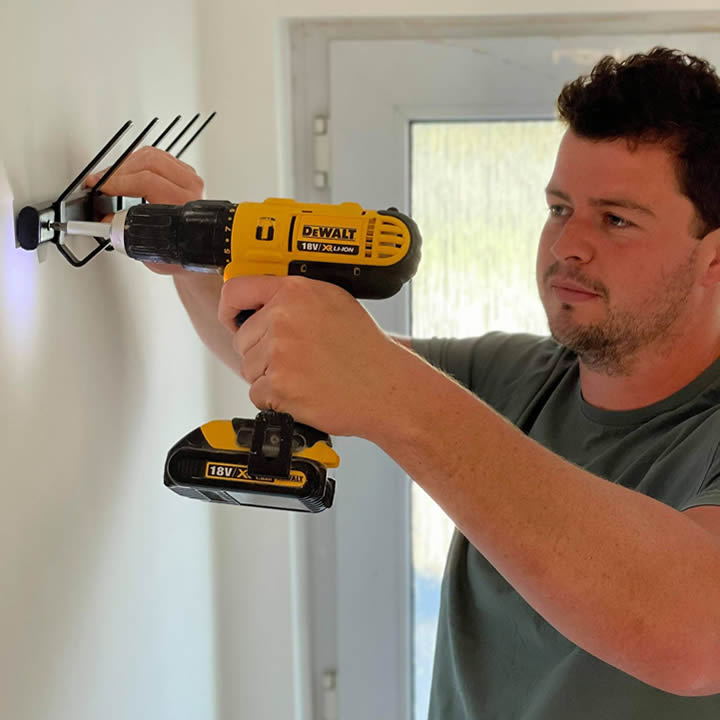
Richard has spent years renovating properties and turning them into rentals and Airbnbs. Like a lot of people he started out as a beginner, and these days there isn't much DIY he won't take on.