Our Guide To Painting New Plaster
Fresh plaster drinks paint like a sponge so a watered-down mist coat goes on first to give the top coats something to hold.

The short answer
To paint new plaster, wait until it has dried to an even pale colour, then roll on a mist coat of matt emulsion thinned with water, around 80% paint to 20% water. The mist coat soaks into the plaster and seals it. Once it's dry, fill any small marks and apply one or two full coats of emulsion.
Once a room has been freshly plastered, it's tempting to crack open the paint the moment the plasterer leaves. New plaster isn't like an ordinary painted wall, though. It's extremely absorbent, and paint rolled straight onto it gets sucked in, dries patchy and can peel away later.
We had several rooms plastered in our own house recently and took photos while we painted them, so the mixing and mist coat photos below come from our own walls.
What You'll Need To Paint Fresh Plaster
- Step ladders
- Bucket and paint stirrer for mixing the mist coat
- Masking tape and dust sheets
- Paint tray and roller
- Paint brush for cutting in
- Matt emulsion for the mist coat and top coats
- Fine filler and sandpaper
Why New Plaster Needs A Mist Coat
A mist coat is emulsion thinned with water. The extra water lets the paint soak into the surface of the plaster instead of skinning over the top, which seals it and gives the next coats a firm base to grip. Skip it and the full-strength paint dries too fast on the thirsty plaster, leaving a blotchy finish that can flake off in sheets.
How To Paint New Plaster
1. Check The Plaster Is Dry
Painting plaster that's still damp traps moisture behind the paint, which leads to peeling and blistering. The colour tells you a lot. Wet plaster is a dark pinkish brown, and it lightens to a pale, even pink as it dries. Dark patches mean it isn't ready, so wait until the whole wall is the same light shade.
Drying time depends on the thickness of the plaster, the time of year and how well the room is ventilated, and our guide on how long plaster takes to dry goes into it in more detail. In a cold room, gentle heat and an open window help it along, but don't blast it with heaters, as plaster that dries too fast can crack.
2. Prepare The Surface
A good plasterer leaves a smooth finish that needs very little work. Where there are rough patches or trowel marks, knock them back gently with medium-grit sandpaper, then go over the area with extra-fine paper. Brush off the dust and mask up skirting, frames and sockets with quality masking tape.
3. Mix Your Mist Coat
Mix the mist coat at roughly 80% emulsion to 20% water, stirring it well in a bucket until it's smooth and runny. The photo below shows ours being mixed. Some paint makers give their own ratio on the tin, so check that first.

There's no need to use your most expensive paint for this coat. Any light-coloured, water-based matt emulsion will do, and a trade or contract matt is ideal because it's breathable. Avoid vinyl emulsions for the mist coat, as they form more of a skin and can stop the plaster drying out. A ready-made primer for new plaster does the same job, but it costs more than mixing your own from a tub of emulsion paint for walls.
4. Apply The Mist Coat
We used a roller to apply our mist coat, as you can see in the photo. The thin mixture spatters more than normal paint, so keep dust sheets down and don't overload the roller. You can brush it on to cut down on mess, but it takes a lot longer on a full room. Our best paint roller picks are worth a look if your sleeve is worn or matted.
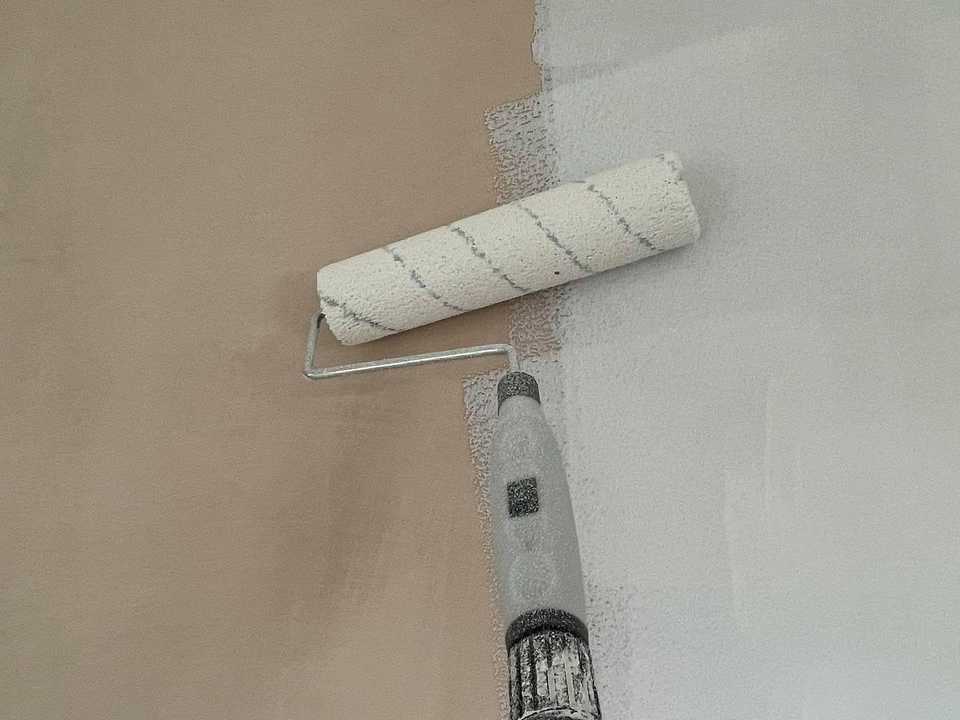
Don't worry if the mist coat looks patchy and thin once it's on. That's normal, and it's the coats on top that give you the even finish. Leave it at least 24 hours to dry before moving on.
5. Fill And Apply The Top Coats
The mist coat shows up small dents and scratches you couldn't see on bare plaster. Fill them with a fine surface filler, sand smooth once dry and touch the repairs in with a little mist coat. Then roll on your chosen emulsion at full strength. One coat can be enough over a good mist coat, but two give a deeper, more even colour.
Problems To Watch For On New Plaster
Most issues come from rushing the drying or skipping the mist coat. These are the common ones:
- Peeling or flaking paint: The plaster wasn't dry, or full-strength paint went straight on without a mist coat
- Patchy colour: Thin top coats over a mist coat, which a second coat sorts out
- Fine cracks: Plaster shrinking as it dries, and our guide on why plaster cracks explains when to fill and when to worry
- Bubbling: Paint rolled over dust or a damp patch
Our Advice For A Newly Plastered Room
Painting new plaster isn't difficult, and once the mist coat is mixed and on the walls, very little can go wrong. Be patient with the drying, keep the mist coat thin and breathable, and save your best paint for the top coats where it shows.
If you're papering instead of painting, the walls still need to be fully dry first, and our step-by-step guide on how to wallpaper a wall covers the prep for bare plaster.
Watch Us Do It
Watch Us TEST Emulsion Paint! Revamping Your Room With Paint Is Easy To Do & Satisfying To Apply!
What People Also Ask Us
Can you paint new plaster without a mist coat?
You can paint new plaster without a mist coat by using a primer made for fresh plaster, but you shouldn't paint it with full-strength emulsion alone. Bare plaster soaks up the paint too quickly, which leaves a patchy finish that can peel. A mist coat of emulsion thinned with water is the cheaper way to seal it.
How long should new plaster dry before painting?
New plaster should dry until it has turned an even pale pink with no darker patches, and the time this takes depends on the plaster thickness, temperature and ventilation. Skimmed walls dry faster than thick backing coats. Painting before it's dry traps moisture and causes peeling, so wait until the whole wall is one colour.
Can you use vinyl matt for a mist coat?
Vinyl matt isn't the best choice for a mist coat on new plaster. Vinyl emulsions form a tougher skin that can stop the plaster breathing as it finishes drying, which can lead to peeling. A non-vinyl trade or contract matt thinned with water soaks in better and is what decorators reach for.
Do you need to sand new plaster before painting?
New plaster only needs sanding where there are rough patches, ridges or trowel marks. Go over those areas lightly with medium-grit paper, then finish with extra-fine paper so you don't scratch the surface. Brush off all the dust before the mist coat, as dust stops the paint soaking in and bonding.
Do I need to use my best paint for the mist coat?
No, the mist coat doesn't need your most expensive paint. A light-coloured, water-based matt emulsion works well, and a trade or contract matt suits the job because it's breathable. The mist coat only seals the plaster and gives the next coats something to grip, so save the better paint for the top coats where it shows.
Is it worth buying a ready-made primer instead of mixing a mist coat?
A ready-made primer for new plaster does the same job as a mist coat, but it costs more than mixing your own from a tub of emulsion. We mix roughly 80% emulsion to 20% water in a bucket on our own walls. Check the tin first, as some paint makers give their own ratio.
Is it better to roll or brush on a mist coat?
A roller is better for a full room, and it's what we used on our own plaster. The thin mixture spatters more than normal paint, so keep dust sheets down and don't overload the roller. A brush cuts down on mess but takes a lot longer across a whole wall.
Why does my mist coat look patchy once it's on?
A patchy, thin-looking mist coat is normal. The watered-down paint soaks into the plaster instead of sitting on top, so it never looks solid at this stage. The coats on top give you the even finish. Leave the mist coat at least 24 hours to dry before you fill marks and apply the full-strength emulsion.

Eddie spent five years as a self-employed painter and decorator before going part time to become one of the main writers at DIY Works. From garden fences to mist coats on fresh plaster, painting and decorating is his speciality.