The Best Home Alarm Systems For UK Homes
Wireless alarm kits you can fit yourself without calling in an electrician.

Our quick verdict
Our pick of the best home alarm systems is the Yale IA-340 Sync Smart Home Alarm. Its yellow bell box warns people off from the street, the app was easy to use in our testing and there are no monitoring fees to pay. If you've already got a Ring doorbell or cameras, the Ring Smart Home Alarm System runs from the same app and costs a little less.
DIY Works is reader supported. If you buy through our links we may earn a commission, which never changes what we recommend. How we make money.
Our Picks At A Glance
- Check price of Yale IA-340 Sync Smart Home Alarm
Best Smart
Yale IA-340 Sync Smart Home AlarmHomeowners wanting a loud bell box and app control with no fees
- Check price of Ring Smart Home Alarm System
- Check price of Eufy Security Home Alarm Kit
- Check price of SimpliSafe Home Security System
Best All-Rounder
SimpliSafe Home Security SystemLarger homes and anyone who wants the option of professional monitoring
- Check price of YISEELE Wireless Home Alarm System
Best Budget
YISEELE Wireless Home Alarm SystemSheds, garages or rentals where cost matters more than finish
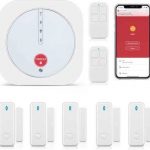
Two things sort these kits faster than any spec sheet. One is who responds when a sensor trips, as a self-monitored kit leaves that to you and your phone while a paid plan hands it to a monitoring company. The other is the bell box, because a visible box on the front wall puts people off and alerts the neighbours in a way an indoor siren can't.
Cheaper kits trade away build quality and siren volume. We've fitted several of these at our own properties, and the five here range from a basic wireless set to a professionally monitored option.
How We Tested These Home Alarm Systems
With rentals and Airbnbs to look after as well as our own homes, we've fitted quite a few alarm systems over the years. Wireless kits mean we can do the installs ourselves, and being able to add sensors later is useful as a property changes.
Our most recent installs were the Yale and Ring kits shown below, laid out as they came out of the box.


We scored each system on the points that matter once it's on the wall:
| What We Checked | Why It Matters |
|---|---|
| Installation | How straightforward the kit is to fit and set up |
| App and controls | How easy it is to arm, disarm and get alerts away from home |
| Siren | How loud the siren output is |
| Build quality | How well made the sensors, keypad and hub are |
| Expansion | How many extra sensors and devices the hub supports |
| Running costs | Whether key features need a monthly subscription |
Siren ratings, wireless range and battery backup times are the brands' own figures, and we've marked them as such.
The Best Home Alarm Systems For DIY Installation
All five kits are wireless and can be fitted without an electrician. Most can be expanded later with extra sensors from the same brand.
Best Smart
Yale IA-340 Sync Smart Home Alarm

Best for: Homeowners wanting a loud bell box and app control with no fees
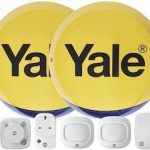
Check Price On AmazonThe Yale Sync is the alarm we'd fit in most houses. When we unboxed the kit everything needed was there, from the hub and keypad to two motion sensors, a door contact and the yellow bell box, and the instructions were clear enough that the setup went smoothly. The Yale Home app was easy to use during our testing, letting us arm, disarm and check the status from anywhere.
The bell box is the loud part, at 104dB according to Yale, with a 96dB siren indoors, and the brand's quoted wireless range of up to 200 metres gives you room to put sensors at the far end of a larger house. It also works with Alexa and Google Assistant and can flash Philips Hue bulbs when the alarm goes off. You pay more up front than for the Ring or Eufy kits, but there are no monitoring fees afterwards.
What we like
- Yale Home app was easy to use in our testing
- Clear instructions and a complete kit in the box
- Internal 96dB siren and 104dB bell box according to Yale
- Up to 200 metre wireless range according to Yale
- Works with Alexa and Google Assistant
- Flashes Philips Hue bulbs when triggered
- No monitoring fees
What to know
- Costs more than the Ring and Eufy kits
Our verdict
For a family home, the Yale Sync is the alarm we'd choose. Ours arrived complete with clear instructions, you can add sensors as you need them, and the bell box does the deterring before anyone gets near a door. It's dearer than some here, so homes already full of Ring devices can save a little with the Ring Alarm.
Best DIY
Ring Smart Home Alarm System

Best for: Homes already using Ring video doorbells or cameras
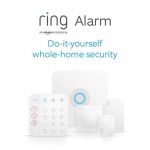
Check Price On AmazonRing is best known for video doorbells, and its alarm system slots into the same app. Our photo shows the kit laid out with a Ring indoor camera and doorbell, and all of them can be run from one app. The kit comes in 5, 7, 9 or 10 piece versions, and any of them can be expanded later.
Ring says you can set it up in minutes without tools, and our kit felt well made with everything needed in the box. Ring rates the siren at 104dB at 30cm, so that figure is taken close to the unit. An optional 3G backup keeps it connected if your broadband drops, and you also get Alexa support and a one-year warranty. Key fobs aren't included, so everyone arms and disarms from the keypad or the app. It's a little cheaper than the Yale.
What we like
- Works alongside existing Ring cameras and doorbells
- Complete kit in the box when we installed it
- Siren rated at 104dB at 30cm according to Ring
- Sold as 5, 7, 9 or 10 piece kits
- Alexa compatible
- Optional 3G backup connection
What to know
- No key fobs in the kit
- No external bell box in the kit
Our verdict
Pick the Ring Alarm if you've already got Ring devices or want everything in one app. It's the simplest way to have doorbell, cameras and alarm on one screen. If you'd like a visible bell box on the front of the house as a deterrent, the Yale Sync gives you that.
Best Value
Eufy Security Home Alarm Kit

Best for: Flats and smaller homes on a budget with no monthly fees
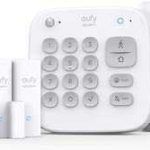
Check Price On AmazonThe Eufy kit is a cheaper way into a smart alarm from a brand with a good name in home security. Everything for a basic install is in the box, it takes minutes to set up, and there are no monthly fees. The Eufy app sends instant alerts to your phone and gives you plenty of settings to adjust.
You can arm and disarm it from the keyring fob or the app, which is handy for anyone in the house who doesn't want to use their phone. The one thing that let it down in our testing was the siren, which wasn't very loud. That matters less in a flat where the alerts on your phone do the work, but in a detached house we'd want something louder.
What we like
- Lower price than the Yale and Ring kits
- Everything included for a basic install
- Instant phone alerts through the Eufy app
- Arm and disarm by keyring fob or app
- No monthly fees
What to know
- The siren wasn't very loud in our testing
Our verdict
App alerts and a simple setup for not much money are the reasons to pick the Eufy kit, and it suits a flat where your phone does the warning. The quiet siren is the weak spot, so on a detached house the Yale Sync with its 104dB bell box makes a stronger deterrent.
Best All-Rounder
SimpliSafe Home Security System

Best for: Larger homes and anyone who wants the option of professional monitoring
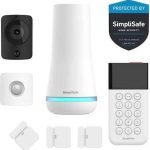
Check Price On AmazonSimpliSafe is a specialist alarm brand, and this wireless system scales from a 5-piece kit to setups with more than 20 components. SimpliSafe says the hub supports up to 100 devices and that installation takes as little as an hour, with no drilling or wiring.
The motion sensors are pet friendly, as SimpliSafe says they detect human body heat rather than cats or dogs, which saves false alarms in a house with pets. There's a 4G data backup and 24-hour battery backup according to the brand, so the system keeps working through a broadband or power cut. It works with Alexa and Google Assistant. The catch is cost, as it's dearer than most here, and some of the best features, including professional monitoring, need one of two paid plans.
What we like
- Expands to 100 components according to SimpliSafe
- Pet-friendly motion sensors
- 4G and 24 hour battery backup according to SimpliSafe
- No drilling or wiring needed
- Works with Alexa and Google Assistant
- User-friendly app
What to know
- Costs more than most kits here
- Some of the best features need a paid plan
Our verdict
Bigger homes, houses with pets and anyone who wants the option of professional monitoring get the most from SimpliSafe. It expands to 100 components and keeps working through a broadband or power cut according to the brand. If you'd rather avoid subscriptions altogether, the Yale Sync covers most homes with no fees.
Best Budget
YISEELE Wireless Home Alarm System

Best for: Sheds, garages or rentals where cost matters more than finish
Check Price On AmazonThe YISEELE is one of the cheapest wireless alarm systems we've come across, and it still comes with its own smartphone app for arming, disarming and alerts. It runs over WiFi, is easy to set up and can be expanded, with YISEELE saying the hub supports up to 100 sensors and 10 remotes.
The hub has a built-in battery that lasts up to 6 hours in a power cut according to the brand, and there's a two-year warranty. You do get what you pay for. The parts don't feel as well made as the branded kits, and we felt the siren could be louder. For a garage, outbuilding or a budget rental it's a sensible buy. Pair it with a dedicated shed alarm if you need to cover a garden building too.
What we like
- Budget price next to the branded kits
- WiFi system with its own smartphone app
- Supports up to 100 sensors and 10 remotes according to YISEELE
- Hub battery backup of up to 6 hours according to YISEELE
- Two-year warranty
- Easy to set up
What to know
- Build quality is behind the branded kits
- We felt the siren could be louder
Our verdict
Price is the whole story with the YISEELE, and for a garage or a budget rental that's enough, as you still get an app and room to add sensors. Don't expect the finish or the siren of the branded kits, though. For your main home, the Yale Sync is worth the extra.
Choosing A Home Alarm System
Most wireless alarm kits look alike in the box, but the way they're monitored, how loud they are and what they cost to run differ a lot.
Self Monitored Or Professionally Monitored
A self-monitored alarm sends alerts to your phone and sounds the siren, and it's up to you to check what's happening. There are no ongoing costs. Professional monitoring means a company watches for alerts and can contact keyholders or the police, for a monthly fee. SimpliSafe offers both, while Yale, Ring and Eufy are built around self-monitoring.
Siren Volume And Bell Box
A visible external bell box is one of the strongest deterrents, and it alerts neighbours when the alarm goes off. Kits without one rely on an indoor siren, which is loud inside but harder to hear from the street. Siren ratings are measured differently between brands, so compare where the figure is taken from as well as the number.
Expanding The System
Start with door contacts on the entrances and a motion sensor covering the hallway or stairs, then add more as needed. Check how many devices the hub supports and what extras the brand sells, such as glass break sensors or indoor security cameras that work in the same app.
Backup If The Power Or Internet Fails
A smart alarm that relies on WiFi can't send alerts if the router goes down. Look for battery backup in the hub and a mobile data backup, which some brands include and others offer as a paid extra. Sensors run on batteries, so keep spares and check the app for low battery warnings.
Pets And False Alarms
Cats and dogs set off standard motion sensors. Pet-friendly sensors ignore smaller animals, and positioning matters too, so mount them high and away from sofas and stairs your pets climb. Repeated false alarms at a rental or Airbnb are a quick way to annoy neighbours.
Building A Layered Setup
An alarm works best alongside other security. Motion-sensor security lights put off anyone approaching in the dark, and a smart lock lets cleaners and guests in without handing out keys.
Home Alarm Questions From Our Readers
Can you install a home alarm system yourself?
Yes, you can install most modern wireless home alarm systems yourself without an electrician. Kits from Yale, Ring, Eufy and SimpliSafe use battery-powered sensors that stick or screw to the wall, and a hub that plugs into a socket and connects to your router. Most are set up through an app that walks you through each step.
Do smart alarms work without WiFi?
A smart alarm will still sound its siren without WiFi, but it can't send alerts to your phone or let you control it remotely until the connection is back. Some systems, including Ring and SimpliSafe, offer a mobile data backup that keeps alerts working when the broadband drops. Check whether that backup needs a paid plan.
Do you have to pay a monthly fee for a home alarm?
No, you don't have to pay a monthly fee for most DIY home alarms. Self-monitored systems such as the Yale Sync and Eufy send alerts to your phone for free. A monthly fee only applies if you want professional monitoring or certain extra features, which some brands like SimpliSafe and Ring offer through paid plans.
Where should alarm sensors go in a house?
Put door contacts on the front and back doors and any patio doors, as these are the most common entry points. Place a motion sensor where an intruder would have to walk, such as the hallway, landing or the room with the patio doors. Add window contacts on easy-to-reach ground-floor windows if your kit allows it.
Is the Yale Sync worth paying more for than the Eufy kit?
The Yale Sync is worth it on a house, because it comes with a visible bell box and Yale quotes 104dB for the external siren. The kit arrived complete with clear instructions and the app was easy to use in our testing. The Eufy kit costs less and sends instant phone alerts, but its siren wasn't very loud in our testing, so it suits a flat better.
Does the Ring Alarm come with an outside siren?
No, the Ring Alarm kit has no external bell box, and no key fobs either. Ring rates the siren at 104dB at 30cm, but it sits indoors. If you want a visible bell box on the front of the house as a deterrent, the Yale Sync includes one. The Ring kit makes most sense if you already run Ring doorbells or cameras in the same app.
Is SimpliSafe a good choice for a house with pets?
Yes, SimpliSafe says its motion sensors are pet friendly, as they detect human body heat rather than cats or dogs, which saves false alarms. It also suits bigger homes, as the system expands to 100 components according to the brand. It costs more than most kits here, and some of the best features need a paid plan.
Is the YISEELE alarm good enough for a garage or rental?
It's a fair choice for a garage or a budget rental, because it's one of the cheapest kits we've come across and still has its own app. YISEELE says the hub supports up to 100 sensors and 10 remotes. The parts don't feel as well made as the branded kits and we felt the siren could be louder. For your main home, the Yale Sync is worth the extra.
Our Favourite Home Alarm System
The Yale Sync Smart Home Alarm is the system we'd fit in most homes, as the bell box puts people off before they try a door and there's no monthly fee to pay. If you already use Ring products, the Ring Alarm is a slightly cheaper DIY kit that keeps everything in one app.
For bigger homes or anyone wanting professional monitoring, SimpliSafe is the one to look at, and the Eufy kit is the value pick for flats.
Richard has spent years renovating properties and turning them into rentals and Airbnbs. Like a lot of people he started out as a beginner, and these days there isn't much DIY he won't take on.